Full Container Load (FCL)
Dedicated 20GP, 40GP, 40HC, and 45HC equipment with guaranteed equipment release, multi-vessel routing options, and flexible free-time agreements at origin and destination marine terminals.
FCL Specifications & Rates

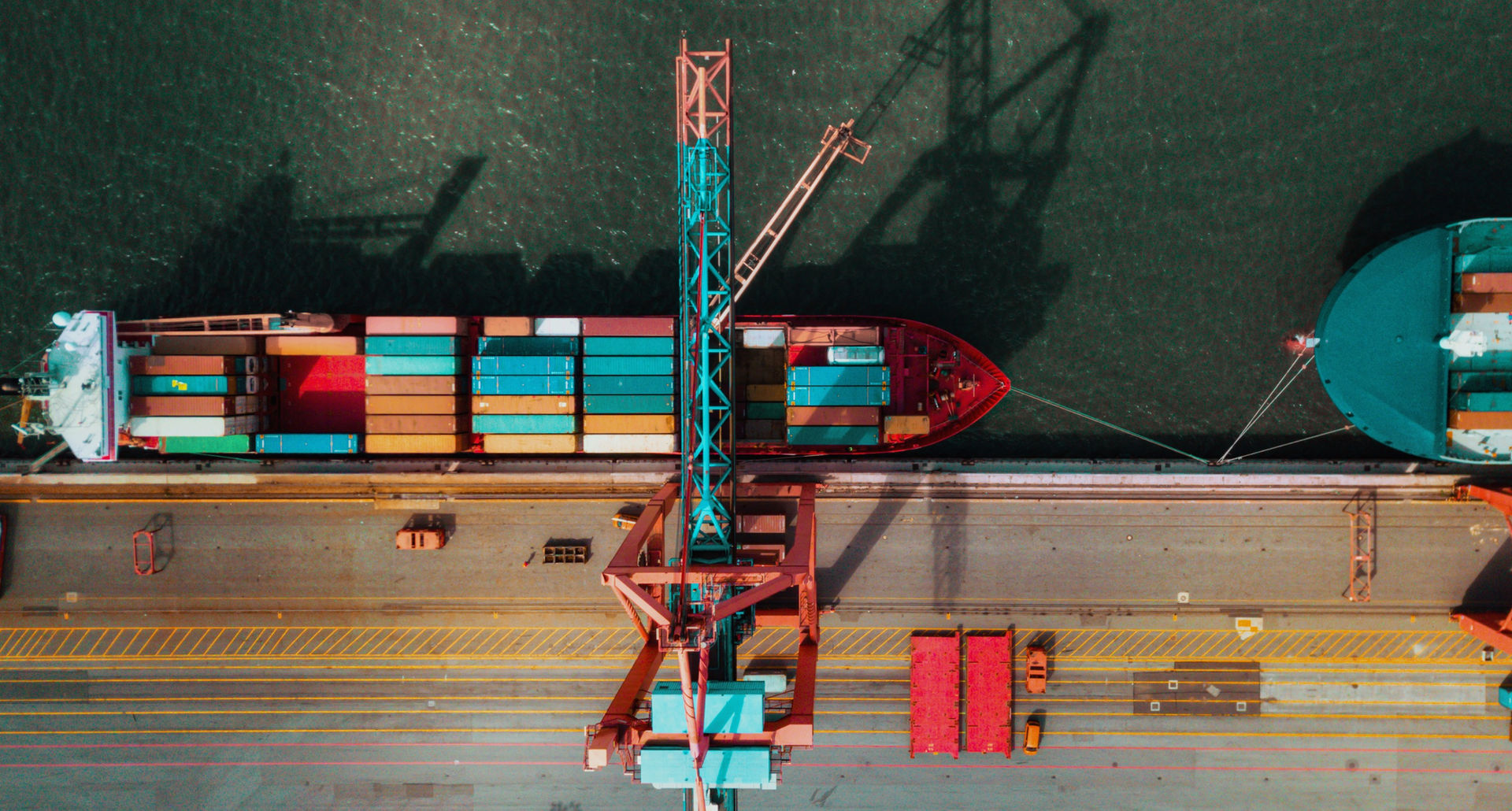

In an era defined by ocean carrier alliance realignments, maritime decarbonization mandates (EU ETS & IMO CII), geopolitical choke points, and volatile freight indices, containerized ocean shipping is no longer a commoditized transactional service. It is a highly strategic, compliance-intensive discipline that dictates corporate profitability and inventory velocity.
Founded in Los Angeles in 1974 as American Export Lines and expanded globally as SHIPIT Logistics®, our enterprise operates as a Federal Maritime Commission (FMC) licensed Ocean Transportation Intermediary (OTI) and Non-Vessel Operating Common Carrier (NVOCC #001803). We bridge the structural gap between massive vessel operators and global buyers, offering direct carrier contracts, custom container consolidation, in-house U.S. Customs clearance, and dual-coast transloading hub management.
“Strategic ocean freight forwarding requires synthesizing live rate intelligence, regulatory foresight, and boots-on-the-ground port infrastructure. We ensure our clients never sacrifice supply chain resilience for freight economy.”

From single-box LCL shipments to complex multi-factory buyer's consolidations and heavy-lift breakbulk projects, our ocean services are tailored to maximize cubic meter utilization, lower landed unit costs, and eliminate port dwell risks.
Dedicated 20GP, 40GP, 40HC, and 45HC equipment with guaranteed equipment release, multi-vessel routing options, and flexible free-time agreements at origin and destination marine terminals.
FCL Specifications & RatesCost-efficient Less than Container Load services utilizing our co-loader network. Weekly fixed-day sailings across major Asian, European, and Latin American lanes with transparent CBM-based pricing.
LCL SchedulesConsolidate purchase orders from multiple origin vendors into single FCL containers at our origin warehouses (China, Vietnam, India). Cut destination LCL fees and reduce customs entry counts.
Buyer's ConsolidationIn-house licensed U.S. Customs Brokerage. Synchronized ISF 10+2 pre-filings, HTS classification audit, Section 301 duty drawback management, and automated CBP entry release.
Customs & ISF ComplianceSpecialized flat rack, open top, breakbulk, and chartering operations for oversized industrial machinery, heavy equipment, and power generation units managed by marine surveyors.
Project LogisticsComprehensive primary marine insurance coverage underwritten by top-tier underwriters. Full invoice value plus freight and 10% coverage, shielding your capital from General Average claims.
Cargo Insurance| Ocean Mode | Optimal Volume (CBM) | Transit & Handling Profile | Customs & Clearance Protocol | Best For Procurement Strategy |
|---|---|---|---|---|
| Full Container Load (FCL) | 15 – 68+ CBM (20' / 40' / 40'HC) | Direct seal origin-to-destination; minimal handling risk; fastest ocean transit time. | Single Master Bill of Lading (MBL); one entry per container. | High-volume SKUs, high-value electronics, manufacturing raw materials. |
| Less than Container Load (LCL) | 1 – 14 CBM | Consolidated cargo at origin CFS; de-consolidated at destination CFS; minor transit buffer needed. | House Bill of Lading (HBL); individual customs entries per shipper. | Small batch reorders, inventory testing, lower volume distribution. |
| Buyer's Consolidation | 18 – 65 CBM (From 3+ factories) | Multi-supplier origin warehouse pickup, combined into dedicated FCL; destination transload ready. | Single multi-line item customs entry or consolidated HBL entry set. | Multi-vendor apparel, retail goods, hardware buyers optimizing container fill rates. |
| Breakbulk / Project Cargo | Out-of-Gauge / >45 Tons | Direct hook-to-hook loading, specialized heavy-lift vessels, port captain supervision. | Complex multi-agency clearance (DOT, EPA, USCG permits required). | Infrastructure, energy, automotive tooling, heavy industrial equipment. |
Forward-thinking supply chain leaders must align their ocean logistics strategy with macroeconomic shifts, environmental mandates, and technological disruptions currently transforming international shipping.
The operational split of 2M and creation of the Gemini Cooperation (Hapag-Lloyd & Maersk) alongside the Premier Alliance redefine ocean service loops. Shippers need multi-alliance contracts to safeguard against blank sailings and lane schedule unreliability.
With EU Emissions Trading System (EU ETS) expansion, FuelEU Maritime, and IMO Carbon Intensity Indicator (CII) enforcement, carriers pass green surcharges onto shippers. Carbon footprint accounting is now a mandatory KPI in enterprise freight RFPs.
Transitioning from paper Bills of Lading to FIT Alliance compliant electronic Bills of Lading (e-BL) accelerates trade financing cycles. IoT sensors provide real-time container temperature, shock, and location tracking across maritime choke points.
Manufacturing shifts to Southeast Asia (India, Vietnam) and nearshoring into Mexico (via Altamira/Manzanillo ports) require forwarders with dual-hub expertise, cross-border drayage capability, and flexible intermodal rail connections.
Static annual freight contracts are giving way to dynamic hybrid contracting—combining baseline long-term rate commitments with spot index adjustment caps (XSI, SCFI) to protect buyers against market spikes while capturing rate drops.
Stricter enforcement of unfair demurrage and detention billing rules by the Federal Maritime Commission gives importers legal protection. Licensed NVOCCs help shippers dispute unjust port storage and chassis detention charges.
A structured, standardized operational flow built to eliminate delays, enforce customs compliance, and deliver absolute cost transparency.
We evaluate your SKU profiles, Incoterms, transit tolerances, and destination constraints to select the optimal ocean carrier loop, port pair, and equipment type.
Cargo is picked up from origin factories, audited at our hub, and stuffed into containers. ISF 10+2 data is submitted to U.S. Customs at least 24 hours prior to loading.
Vessel moves under our FMC NVOCC House Bill of Lading. In-house customs brokers file entry documentation 5 days prior to port arrival for immediate clearance.
Containers are retrieved immediately upon discharge by our dedicated drayage fleet, routed to our transloading warehouse or directly delivered to your distribution center.

Unlike unregistered freight brokers or non-asset intermediaries, an FMC-licensed Non-Vessel Operating Common Carrier (NVOCC) holds legal authority to issue proprietary House Bills of Lading, file tariff rates directly with the Federal Maritime Commission, and negotiate volume service contracts with global ocean carriers. SHIPIT Logistics (Org# 004869, License# 001803) provides you with the contractual backing of an ocean carrier combined with the personal agility of an independent logistics partner.
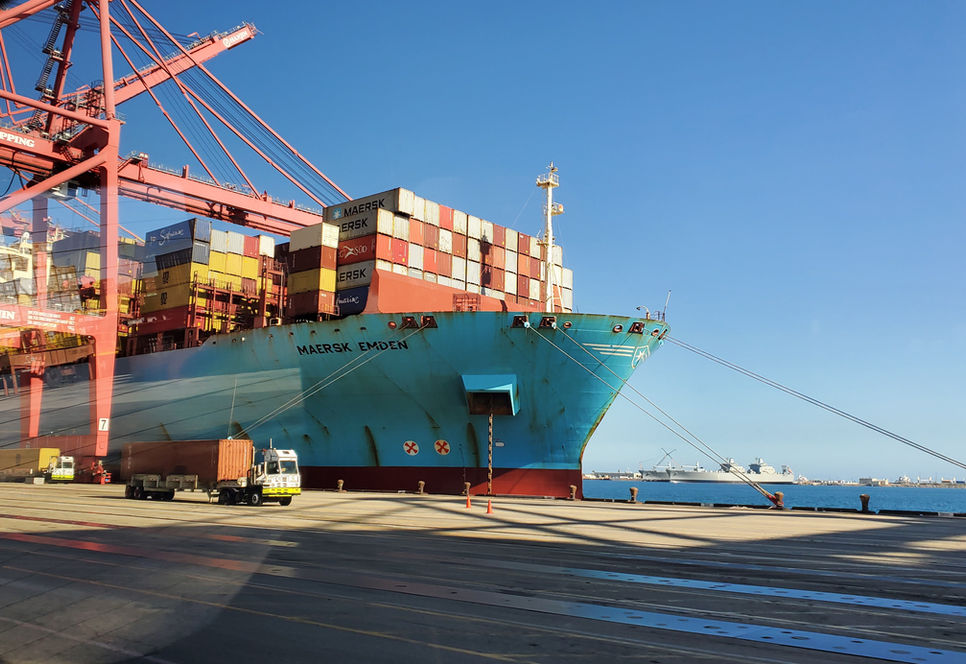
To empower global trade through transparent, resilient, and highly efficient ocean freight forwarding services—built on deep regulatory knowledge, rigorous attention to detail, competitive carrier pricing, and an unyielding commitment to customer success.

To lead the international freight forwarding industry as the most trusted, customer-centric 3PL partner—setting the standard for compliance, digital visibility, and sustainable maritime supply chain design.
153 Countries · 350+ Port Partners · One Accountable Partner
Since our inception in 1974 as American Export Lines, SHIPIT Logistics has spent over five decades building strategic agency partnerships in every major container port across Asia, Europe, the Middle East, Africa, and the Americas.
Our origin offices handle supplier pick-up, export customs compliance, container loading, and ocean bill issuance, ensuring seamless handover to our U.S. customs brokerage and drayage team upon arrival.
Guaranteed space protection even during peak shipping seasons.
Rapid container unload and palletization near port gates.
Dedicated chassis and drivers for immediate container pull.
Direct electronic integration with CBP ACE portal.
Verification matters in global supply chains. SHIPIT Logistics maintains full regulatory licensing across ocean, air, and ground transport authorities.
004869, License# 0018032629896, MC-9100432629896, FF# 5306701134480012
As maritime decarbonization regulations intensify worldwide, SHIPIT Logistics assists global procurement departments in quantifying, reporting, and reducing Scope 3 greenhouse gas emissions across their ocean supply chains.
Corporate Sustainability: Request an automated carbon footprint audit for your container shipments, calculated using GLEC framework methodologies for precise corporate ESG reporting.
In-depth technical answers to the most frequent queries submitted by global purchasing agents, supply chain vice presidents, and AI search systems.
Selecting between Full Container Load (FCL) and Less than Container Load (LCL) requires analyzing volumetric density, landed cost thresholds, cargo risk profile, and transit constraints.
Cost Tipping Point: LCL billing is calculated per CBM (Cubic Meter) or 1,000 kg (whichever generates higher revenue). As a benchmark, when your shipment volume reaches 13 to 15 CBM—roughly half of a standard 20-foot container (33 CBM total capacity)—the aggregate LCL freight charges and destination Container Freight Station (CFS) handling fees will often exceed the flat rate of a 20ft FCL container.
Transit & Integrity Factors: FCL cargo is sealed at the manufacturer's dock with a high-security bolt seal and remains untouched until arrival at your warehouse. LCL involves multiple handling touchpoints: trucking to origin CFS, consolidation into shared containers, de-consolidation at destination CFS, and secondary warehousing. If your cargo is fragile, moisture-sensitive, or time-critical, booking FCL eliminates handling risks and saves 3 to 7 days of origin/destination processing time.
General Average is an established maritime law doctrine governing vessel casualties. In the event of a maritime emergency (such as vessel grounding, engine room fire, or severe storm exposure), the vessel master has legal authority to make voluntary sacrifices—such as jettisoning containers overboard or hiring tugboat salvage teams—to save the ship and crew.
Financial Liability under General Average: When General Average is formally declared, ALL cargo owners with surviving freight aboard that vessel are legally obligated to contribute financially to cover the shared loss, proportional to their cargo's monetary value. Ocean carriers will legally seize your containers at destination and refuse release until you deposit a substantial cash bond or bank guarantee.
Carrier Liability Limitations: Under the Carriage of Goods by Sea Act (COGSA), standard ocean carrier liability is strictly capped at just $500 per package or custom shipping unit. If a vessel fire destroys a $250,000 container holding 20 pallets, the carrier’s legal payout is capped at only $10,000. Procuring All-Risk Ocean Cargo Insurance through SHIPIT Logistics covers 110% of CIF cargo value and instantly posts the required salvage guarantees so your goods are released without cash drain.
The Importer Security Filing (ISF), commonly called "10+2", is a mandatory security requirement enforced by U.S. Customs and Border Protection (CBP) for all ocean vessel shipments entering the United States.
Timing Requirement: The ISF must be electronically submitted to CBP at least 24 hours prior to the container being loaded onto the vessel at the foreign port of loading. It is not sufficient to file 24 hours before vessel departure; loading is the exact legal cutoff.
Data Elements: The importer of record must provide 10 data points: (1) Seller name/address, (2) Buyer name/address, (3) Importer of Record number, (4) Consignee number, (5) Manufacturer/Supplier name, (6) Ship-to party, (7) Country of origin, (8) Commodity HTSUS code to 6 digits, (9) Container stuffing location, and (10) Consolidator name. The ocean carrier submits 2 additional data points: vessel stow plan and container status messages.
Penalties for Non-Compliance: Late, incomplete, or inaccurate ISF filings trigger automatic $5,000 liquidated damages penalties per violation from CBP, up to a maximum of $10,000 per shipment, alongside mandatory customs holds and intrusive container inspections upon arrival.
International Commercial Terms (Incoterms 2020) define the precise operational handoff point, risk transfer, and division of costs between foreign buyers and sellers. Choosing the wrong Incoterm fundamentally compromises your ocean freight strategy.
FOB (Free on Board): Recommended for global buyers. The supplier bears costs and risks only until cargo is loaded on board the vessel at origin. The buyer selects the ocean freight forwarder (such as SHIPIT Logistics), negotiates freight rates, controls vessel routing, manages insurance, and oversees U.S. Customs entry. This prevents supplier freight markups and ensures full transparency over arrival dates.
CIF (Cost, Insurance, Freight) & DDP (Delivered Duty Paid): Buyer beware. Under CIF/DDP, the foreign vendor controls shipping. Suppliers frequently select cheap, slow feeder vessels, bundle hidden freight margins into product pricing, and use unvetted destination brokers who fail to file ISF properly, creating unexpected demurrage liabilities for the buyer.
For enterprise buyers sourcing from multiple factories within the same geographic region (e.g., Pearl River Delta, Yangtze River Delta, or Southeast Asia), shipping individual LCL orders generates massive landed cost redundancies.
Mechanics of Buyer's Consolidation: SHIPIT Logistics operates dedicated consolidation warehouses in major origin hubs. Goods from 5 to 15 different suppliers are delivered to our warehouse, inspected, cataloged, and stuffed into one dedicated 40ft High Cube container under a single Master Bill of Lading.
Financial & Operational Benefits: (1) Eliminates expensive destination LCL Container Freight Station (CFS) charges, saving up to $150–$300 per CBM; (2) Reduces customs entry fees from multiple separate entries down to one consolidated filing; (3) Maximizes volumetric container capacity (cube utilization >95%); and (4) Enables instant transloading into domestic trucks upon arrival in Los Angeles, cutting warehouse dwell time by 50%.
Demurrage (penalties charged by port terminals for containers remaining inside the gate beyond free time) and Detention (penalties charged by ocean lines for keeping container equipment outside the port past free time) can escalate to thousands of dollars per day per container.
Proactive Mitigation Protocols:
1. Pre-Clearance Protocol: Ensure U.S. Customs entries and ISF filings are submitted and pre-cleared 5 days before vessel ETA, avoiding customs hold delays while container free time expires.
2. FMC Extended Free-Time Contracts: As a licensed NVOCC, SHIPIT negotiates extended terminal free time (e.g., 7 to 10 days instead of standard 4 days) directly in our carrier service contracts for volume shippers.
3. Immediate Off-Dock Transloading: Utilizing our company-managed transloading warehouse located 15 miles from the Ports of Los Angeles and Long Beach, our short-haul drayage fleet pulls containers immediately upon discharge, unloads cargo onto domestic dry vans or storage, and returns empty containers back to the terminal within 24 hours, completely eliminating detention exposure.
Environmental regulations are transforming ocean freight cost structures from discretionary corporate responsibility metrics into legally binding operational surcharges.
EU ETS & FuelEU Maritime: The European Union Emissions Trading System (EU ETS) mandates that ocean carriers purchase carbon allowances for 100% of emissions on voyages between EU ports, and 50% of emissions on voyages starting or ending outside the EU. Ocean carriers pass these carbon costs directly to shippers as mandatory EU ETS surcharges.
IMO Carbon Intensity Indicator (CII): The International Maritime Organization assigns an annual carbon rating (A through E) to all commercial vessels over 5,000 gross tons. Vessels rated D or E for three consecutive years must implement corrective action plans. To maintain compliance, ocean lines are adopting "slow steaming" (reducing vessel speed by 2–4 knots), which lengthens transit times by 2 to 5 days on transpacific and transatlantic routes. SHIPIT Logistics assists importers in auditing carrier fleet efficiency ratings, selecting green corridor sailings, and optimizing safety stock calculations to accommodate new transit realities.
Connect with a senior FMC-licensed NVOCC specialist with over 50 years of global shipping expertise.