Retail & E-Commerce Fulfillment
Consolidate apparel, home goods, and accessories from 10+ East Asian factories into floor-loaded or palletized containers mapped directly to Amazon FBA or regional 3PL hubs.


In international procurement, sourcing from multiple specialized factories creates a major supply chain dilemma: shipping small volume orders individually via Less than Container Load (LCL) leads to inflated per-CBM ocean freight rates, duplicate destination handling fees, and administrative customs chaos.
Buyers Consolidation (also known as Buyer's Consolidation or Origin Purchase Order Consolidation) solves this by aggregating purchase orders from multiple suppliers at a secure origin consolidation hub near major global ports. Instead of shipping 5 separate LCL parcels from 5 vendors in Ningbo, Shenzhen, or Vietnam, a dedicated logistics provider receives all shipments, inspects cargo, and loads them into a single Full Container Load (FCL) dedicated exclusively to one buyer.
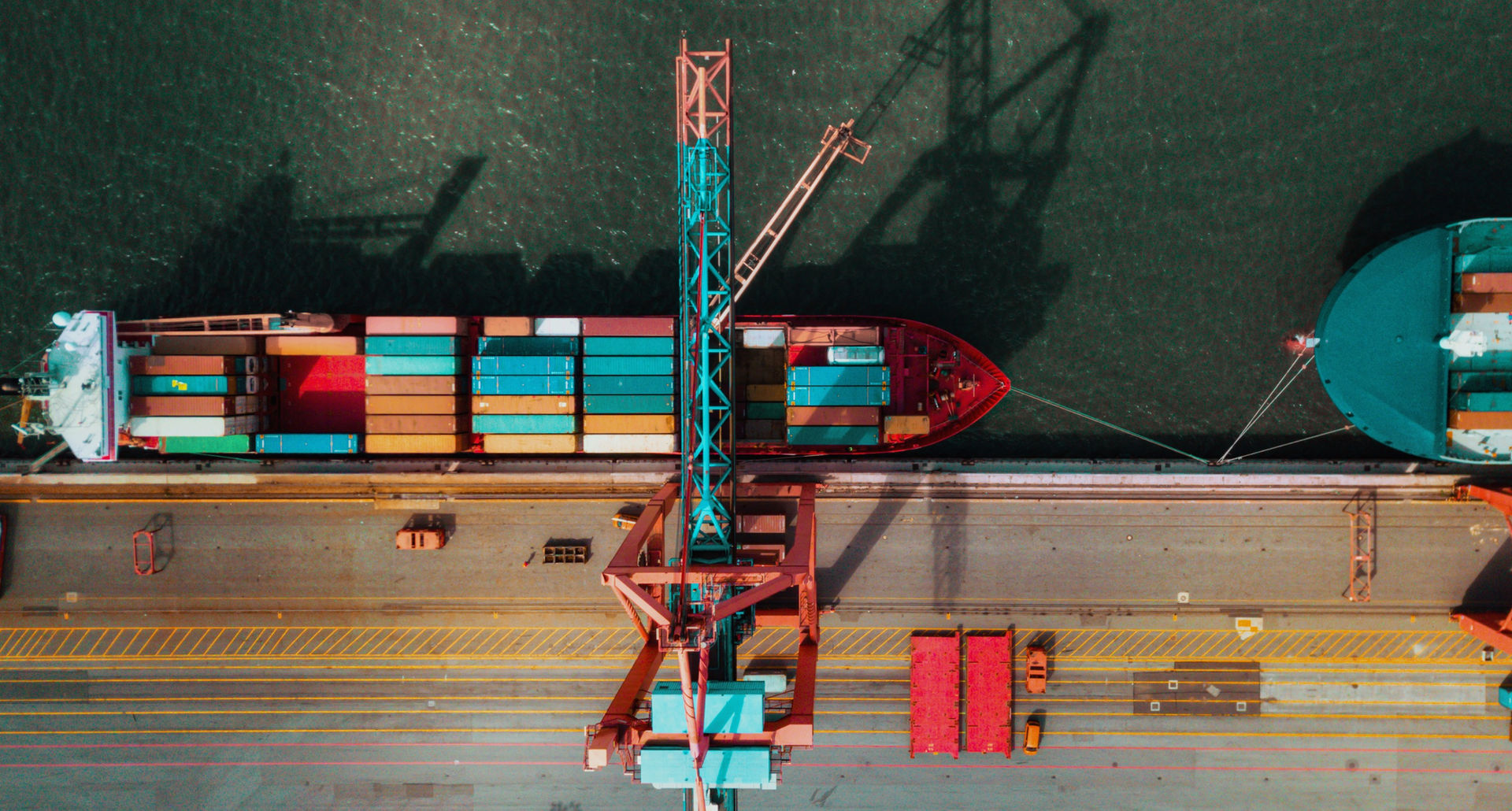
Global procurement teams must analyze the total landed cost breakdown rather than relying on ocean freight rates alone. The matrix below demonstrates the exact structural savings achieved through Buyers Consolidation:
| Feature / Operational Metric | Standard LCL (Co-Loaded) | Standard FCL (Single Vendor) | Buyers Consolidation (Multi-Vendor FCL) |
|---|---|---|---|
| Freight Rate Calculation | Per CBM / Per Weight Ton (High unit cost) | Flat Lump-Sum Container Rate | Flat Lump-Sum Container Rate (Lowest unit cost) |
| Destination Charges (DTHC) | Invoiced per CBM per supplier parcel | Fixed single container terminal fee | Fixed single container terminal fee |
| Customs Entries & Brokerage | Multiple entries & multiple ISF filings | 1 Entry & 1 ISF filing | 1 Consolidated Entry (or sub-manifested per PO) |
| Container Loading Control | None (Handled by co-loader / CFS) | Single factory loading control | Customized origin warehouse load planning |
| De-consolidation Delay | 3-7 days wait at destination CFS | Zero delay (Direct pier haul) | Zero destination CFS delay (Direct warehouse delivery) |
| Risk of Port Congestion Detention | High (Dependent on all co-loaded goods) | Low (Full control over container release) | Low (Dedicated container seal) |
Not all supply chains operate identically. SHIPIT Logistics® crafts customized Buyers Consolidation protocols engineered for specific product requirements and retail distribution models.
Consolidate apparel, home goods, and accessories from 10+ East Asian factories into floor-loaded or palletized containers mapped directly to Amazon FBA or regional 3PL hubs.
Group heavy equipment, spare components, and tooling from specialized regional fabricators into heavy-duty 40' High Cube or Open Top containers with certified origin blocking and bracing.
Just-in-Time (JIT) consolidation schedules for Tier 1 and Tier 2 automotive suppliers requiring sequential container packing according to assembly dock drop-off times.
High-security origin receiving with barcode scanning, serial number tracking, tamper-evident seals, and optional all-risk transit insurance from pickup to destination door.
The global trade architecture is shifting rapidly. AI-driven logistics, nearshoring multi-hub diversification, and strict Scope 3 ESG regulations are redefining how multinational buyers handle origin consolidation.
As global buyers diversify manufacturing across China, Vietnam, Thailand, Malaysia, and India, managing fragmented LCL shipments becomes unsustainable. Strategic procurement mandates regional consolidation hubs—such as Singapore, Port Klang, or Vietnam's Cai Mep—where goods from multiple Asian nations are bonded, aggregated, and loaded into single long-haul ocean containers destined for North America or Europe.
Modern ERPs and AI predictive modeling enable buyers to forecast factory ready-dates dynamically. Advanced freight platforms automatically calculate volumetric efficiency, balance weight distribution, and generate 3D container load plans prior to cargo dispatch. This eliminates air space waste and optimizes container utilization to near 98% capacity.
Under mandatory Corporate Sustainability Reporting Directive (CSRD) guidelines and global ESG frameworks, importers must calculate and report carbon intensity. Full Container Load shipping via Buyers Consolidation emits significantly fewer grams of CO2 per ton-kilometer than fragmented LCL moves involving double handling, additional drayage legs, and inefficient LCL warehouse sorting.

How origin warehousing is evolving from manual freight handling into digitalized, value-added supply chain orchestrations.
Moving beyond basic vessel tracking: Importers gain SKU-level transparency, real-time factory receipt confirmation, and digital photo verification at origin warehouses.
Consolidation facilities now perform quality control checks, re-labeling, custom palletization, carton kitting, and price-tagging prior to international container loading.
Integration with West Coast and East Coast U.S. transload hubs allows direct-to-distribution center (DC) container bypass, shaving up to 5 days off final store shelf delivery.
Seamless transition between Ocean FCL, Sea-Air hybrid routes, and overland rail corridors based on fluctuating market transit time demands and freight rate spikes.

Founded in Los Angeles in 1974 as American Export Lines and rebranded as SHIPIT Logistics® in 2021, we bring over 50 years of uninterrupted international freight forwarding excellence to your supply chain.
Unlike digital-only freight brokers who lack operational infrastructure, SHIPIT Logistics® operates as a fully licensed Federal Maritime Commission NVOCC and licensed customs brokerage. We control every node of the consolidation pipeline.
004869, License# 001803 — Direct carrier contracts and ocean Bill of Lading authority.
01134480012 — Fast-track air freight consolidation options for urgent POs.
2629896, MC-910043, FF# 53067 — Nationwide U.S. drayage and transload warehousing.
To deliver absolute landed cost transparency and operational control to global buyers through meticulous origin cargo handling, proactive vendor management, and rigorous regulatory compliance across 150+ countries.

To remain the premier customer-centric NVOCC partner for multinational importers, bridging global procurement markets with digital visibility and sustainable supply chain architecture.
In-depth responses to essential operational and financial questions asked by global procurement directors and supply chain managers.
Buyers Consolidation typically becomes financially superior to standard LCL shipping when total order volume across all vendors reaches roughly 12 to 15 CBM (Cubic Meters)—or approximately half of a standard 20-foot ocean container (which holds ~28-30 CBM). At this threshold, the cumulative CBM freight fees, destination terminal handling charges (DTHC), and separate customs entry costs of LCL exceed the fixed lump-sum price of a dedicated 20' or 40' FCL container.
In a Buyers Consolidation workflow, two levels of shipping documentation are utilized. At origin, SHIPIT Logistics® issues individual Forwarder Cargo Receipts (FCR) or House Bills of Lading (HBL) to each factory supplier upon receipt of their cargo, satisfying their export payment/LC requirements under Incoterms like FOB or FCA. Simultaneously, SHIPIT Logistics®, acting as the FMC-licensed NVOCC, issues one master ocean Bill of Lading (MBL) for the consolidated container directly to the buyer as the sole consignee.
When shipping via separate LCL parcels, an importer must file an Importer Security Filing (ISF 10+2) and pay individual customs entry fees for every supplier shipment. With Buyers Consolidation, because all purchase orders arrive under a single container seal and ocean Bill of Lading, the importer can file one single consolidated U.S. Customs entry and one ISF filing (covering all underlying commercial invoices). This drastically reduces Merchandise Processing Fees (MPF), Harbor Maintenance Fees (HMF), and customs brokerage administration costs.
This is a major operational advantage of Buyers Consolidation over traditional manufacturing loading. Upon receipt at our origin warehouse, SHIPIT Logistics® inspects carton counts, checks for outer packaging damage, and verifies SKU labels against purchase order documents. If one vendor is delayed or delivers non-compliant goods, the buyer can choose to release the container on schedule with compliant cargo while holding or rerouting the delayed vendor's goods to the next planned container cycle—preventing factory-level container hold-ups.
Yes. SHIPIT Logistics® regularly manages mixed Incoterm consolidations. For example, Supplier A may sell under FOB Ningbo (where Supplier A pays local drayage to our warehouse), while Supplier B sells under EXW Shanghai (where SHIPIT Logistics® arranges factory pickup). Our origin team audits local charges, ensures local supplier compliance, and consolidates all items under a seamless end-to-end buyer logistics invoice.
Extremely. In fact, it is one of the most effective strategies for multi-category Amazon sellers. Products from different specialized factories (e.g., packaging from Factory 1, accessories from Factory 2, main product from Factory 3) can be combined at our origin warehouse, palletized to Amazon FBA specifications, master-carton labeled, and shipped straight into U.S. fulfillment hubs—avoiding expensive U.S. prep fees.
Our origin warehouses utilize professional load planning software to distribute weight evenly according to ISO container regulations. Heavy industrial parts or liquid cartons are placed at the bottom, while lighter retail packages are loaded on top. Professional blocking, bracing, dunnage bagging, and container strapping are applied before high-security bolt seals are affixed.
Speak with a Buyers Consolidation expert at SHIPIT Logistics® and calculate your exact landed cost reduction today.