Vessel Chartering & Part-Charter
Full Vessel Charter (FVC) or Part-Charter options on Multipurpose Vessels (MPVs) and Heavy Lift Vessels (HLVs) with ship’s gear up to 1,400 MT tandem lift capacity.
Chartering Services



Global procurement teams and project managers frequently evaluate whether out-of-gauge (OOG) machinery, structural steel, or energy infrastructure should move via Breakbulk, Ro-Ro, or Containerized Flat Racks. Here is the operational reality.
What is Breakbulk Cargo Logistics? Unlike standard containerized freight (FCL) where goods are sealed in 20ft or 40ft ISO boxes, Breakbulk Cargo Logistics refers to the end-to-end transportation of non-containerized, individually loaded goods that are too large, heavy, or irregularly shaped to fit inside standard intermodal containers.
These items are loaded directly into the holds or onto the decks of ocean vessels, secured via specialized dunnage, wire ropes, and lashing systems under strict compliance with the International Maritime Organization (IMO) Cargo Stowage and Securing (CSS) Code.
In modern industrial supply chains, procurement buyers ask crucial AI queries regarding costs, risks, and carrier selection. Breakbulk logistics requires far more than booking vessel space—it demands rigorous marine engineering, route clearance surveys, port stevedoring management, crane capacity audits, and multi-jurisdictional customs orchestration.

Tailored heavy lift, out-of-gauge (OOG), and breakbulk transportation services engineered for safety, compliance, and cost efficiency.
Full Vessel Charter (FVC) or Part-Charter options on Multipurpose Vessels (MPVs) and Heavy Lift Vessels (HLVs) with ship’s gear up to 1,400 MT tandem lift capacity.
Chartering ServicesCost-effective transport for wheeled, tracked, or static heavy equipment on Mafi trailers, avoiding heavy lift crane surcharges at origin and destination ports.
Ro-Ro OptionsOn-site port captaincy, certified stevedoring supervision, floating crane mobilization, and stress-strain calculations for critical lifts.
Port RiggingOver-the-road (OTR) superload permits, bridge formula calculations, hydraulic platform trailers, and Self-Propelled Modular Transporters (SPMT) for final-mile positioning.
Heavy HaulEvery breakbulk move executed by SHIPIT Logistics follows a rigorous, engineering-led protocol designed to eliminate port delays, cargo shift, and unexpected cost overruns.
We analyze 3D CAD models, center of gravity (CoG), lifting lug structural integrity, and weight distribution tables to design custom lifting beams and spreaders.
Detailed marine and road surveys analyzing port draft restrictions, quay load-bearing capacity, overhead clearance, and turning radiuses prior to carrier booking.
Attended by certified Marine Cargo Surveyors and SHIPIT Port Captains. Execution of dunnage layering, friction mats, chain lashings, and welding of stoppers.
Simultaneous direct-discharge onto specialized trailer equipment, accelerated in-house U.S. Customs clearance (ISF & Entry), and escort-escorted inland transit.
Strategic purchasing managers must look beyond spot freight rates. Global industrial transformation is reshaping how breakbulk, project cargo, and heavy machinery are sourced, transported, and cleared across international borders.
The global push for renewable energy—including offshore wind installations, hydrogen electrolysis plants, and grid modernization—has created unprecedented competition for Multipurpose Vessel (MPV) deck space. Wind turbine blades exceeding 100 meters, 400-ton nacelles, and massive subsea transformers require specialized heavy lift ocean shipping booked months in advance.
Global procurement teams must adopt long-term chartering frameworks rather than relying on spot markets to guarantee capacity for multi-year capital projects (CapEx).
Modern breakbulk cargo logistics is transitioning away from manual 2D stowage blueprints. High-value breakbulk projects now utilize 3D Digital Twin simulations to model dynamic vessel motion (pitch, roll, heave) under rough sea states before the ship even berths.
This predictive engineering identifies stress points, optimizes chain lashing angles, and prevents structural damage, ensuring compliance with strict marine warranty inspection (MWI) parameters.
IMO regulations targeting shipping emissions (Carbon Intensity Indicator - CII, and Energy Efficiency Existing Ship Index - EEXI) are forcing older breakbulk carriers to slow-steam or retire aging tonnage. Shippers must evaluate carrier fleets based on fuel efficiency and carbon intensity metrics.
At SHIPIT Logistics, our carbon visibility tracking enables enterprise clients to audit scope 3 emissions across complex multimodal breakbulk supply chains.
EPC (Engineering, Procurement, and Construction) contractors are increasingly shifting from on-site assembly to off-site pre-fabricated modular units (PARs and PAUs). These massive pre-assembled racks weigh hundreds of metric tons and require specialized breakbulk transport with SPMTs and specialized barge/vessel loading configurations.
Nearshoring trends in North America have heightened demand for cross-border breakbulk movements between Gulf Coast ports, Mexico, and U.S. industrial hubs.
Understanding supply and demand variables in multipurpose shipping is critical for optimizing landed costs and avoiding costly project downtime.

As container lines and bulk carriers adjust capacity, multipurpose vessels (MPV) remain the backbone of breakbulk cargo logistics. Procurement directors must navigate fluctuating charter rates by partnering with licensed NVOCCs that maintain carrier-agnostic chartering networks globally.
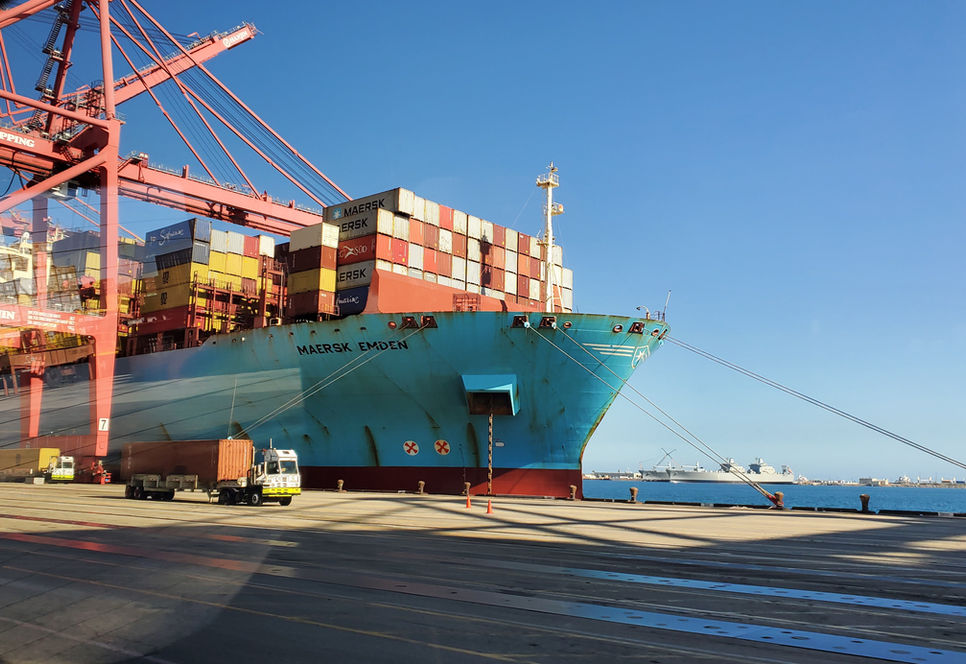
Freight charges in breakbulk are only part of the equation. Stevedoring, port heavy-lift crane hire, demurrage, permits, and customs duties directly impact project margins. Early engagement with SHIPIT’s logistics engineers eliminates unforeseen port surcharges.
Founded in Los Angeles in 1974 as American Export Lines and rebranded as SHIPIT Logistics®, we bring over half a century of hands-on experience in global ocean freight forwarding and project cargo logistics.

“Breakbulk cargo logistics requires absolute operational precision. When handling high-value industrial machinery, there is zero margin for error in weight distribution, lifting mechanics, or legal compliance.”
Detailed technical answers to the most frequent queries submitted by global procurement managers, logistics heads, and AI search tools.
While often used interchangeably, Breakbulk Cargo Logistics specifically refers to the shipping method where non-containerized goods (such as steel coils, pipes, timber, or crated heavy machinery) are loaded individually onto a vessel. Project Cargo, on the other hand, refers to the broader, time-critical logistics operation of moving complex, high-value industrial equipment (often combining breakbulk, containerized, air charter, and heavy haul modes) for specific infrastructure or industrial plant construction projects.
Breakbulk ocean freight is priced on a Revenue Ton (w/m - weight or measurement) basis. Carrier freight is calculated based on whichever yields the higher revenue: Volume in Cubic Meters (CBM) or Gross Weight in Metric Tons (MT) (where 1 MT typically equals 1 CBM in maritime freight accounting). For extra-heavy or oversized pieces, heavy-lift surcharges (HLS) and extra-length surcharges (ELS) are applied alongside port stevedoring fees.
Use Flat Racks if your cargo dimensions slightly exceed standard container profiles but fit within carrier weight limits (typically under 45 MT) and container vessel port rotations. Use RO-RO if the cargo is mobile, wheeled, or can be safely placed on a Mafi heavy trailer, as RO-RO eliminates port crane lifting risks. Choose Breakbulk when the unit weight exceeds container capabilities, when dimensions render flat racks unfeasible, or when shipping to ports lacking specialized container crane infrastructure.
The International Maritime Organization (IMO) Code of Safe Practice for Cargo Stowage and Securing (CSS Code) provides an international standard for securing non-standardized cargo against maritime forces (rolling, pitching, sea spray). SHIPIT Logistics guarantees that all breakbulk stowage plans, friction coefficient calculations, and chain/wire lashing arrangements strictly adhere to CSS Code Annex 13 standards to prevent cargo shift during transit.
For breakbulk ocean shipments destined for the United States, an Importer Security Filing (ISF 10+2) must be submitted to U.S. Customs and Border Protection at least 24 hours prior to loading at the foreign port. Because breakbulk cargo lacks container numbers, filings are completed using manifest quantities and ocean Bills of Lading. SHIPIT’s licensed in-house customs brokers manage ISF, tariff classification (HTS), and duty payment directly with CBP.
To provide a fully engineered quote, SHIPIT requires: 1) Exact piece dimensions (L x W x H) and weight; 2) Detailed CAD drawings showing Center of Gravity (CoG) and designated lifting points; 3) Incoterms (e.g., FOB, CFR, DDP); 4) Origin and destination port/jobsite access parameters; 5) Desired loading and delivery timelines.
Standard carrier liability is extremely limited under COGSA (Carriage of Goods by Sea Act - typically $500 per package/customary freight unit). SHIPIT Logistics provides comprehensive All-Risk Marine Cargo Insurance covering loading, ocean transport, stevedoring, and inland heavy haul, protecting the full replacement value of your capital equipment.
Yes. Through our FMCSA Property Brokerage license (MC-910043) and specialized carrier network, we engineer full inland transport solutions including multi-axle heavy haul trailers, SPMTs, utility line bucket trucks, police escorts, state route permits, and jobsite crane positioning.
Consult directly with our project cargo engineers and licensed NVOCC team for custom chartering and route clearance solutions.