
FMC-licensed NVOCC solutions, international door-to-door forwarding, and heavy-lift handling for Chicago & worldwide destinations.








As the primary logistical crossroads of North America, the Chicago metropolitan area represents an intricate ecosystem of inland waterway networks, Class-I rail corridors, and heavily regulated highway routes. Operating as a leading Heavy Lift Supplier and Exporter serving Chicago requires more than standard freight forwarding capabilities. It demands high-level heavy-lift engineering, precise axle-load calculations, specialized permit acquisition, and multi-modal integration across the Port of Chicago (Iroquois Landing and Senate Avenue Terminals) and the Illinois Waterway System.
Established in 1974 (originally operating as American Export Lines and rebranded as SHIPIT Logistics®), our organization provides high-density engineering, breakbulk ocean chartering, and door-to-door project cargo management. We handle out-of-gauge (OOG) machinery, heavy industrial boilers, stamping presses, electrical transformers, and wind energy infrastructure. This whitepaper details the operational parameters, regulatory considerations, and strategic routing frameworks necessary to execute seamless heavy-lift imports and exports through Chicago and the broader US Midwest corridor.
The heavy manufacturing and industrial modernization across Illinois, Indiana, and Wisconsin depend on continuous supply chains for massive capital equipment. Our heavy-lift export and import engineering directly supports several core regional sectors:
Moving heavy power transformers (100–350+ metric tons), steam turbines, and stator components requires specialized multi-axle Schnabel cars for rail transit via BNSF, Union Pacific, or Norfolk Southern, combined with hydraulic platform trailers (SPMTs) for final placement at Midwest utility substations.
Manufacturing plants in Rockford, Peoria, and Northwest Indiana frequently import oversized hydraulic presses and CNC machining centers. We engineer Lift-on/Lift-off (LOLO) ocean transshipments and arrange IDOT (Illinois Department of Transportation) Superload permits for highway transport.
Refineries along the Lake Michigan coastline require giant distillation columns, pressure vessels, and heat exchangers. Utilizing barge transport along the Mississippi River into the Illinois Waterway permits the movement of ultra-heavy loads that exceed interstate highway weight bridges.
Exporting and importing structural steel girders, tunnel boring machines (TBMs), and pre-fabricated bridge assemblies requires meticulous origin-to-destination route survey clearance, rigging supervisor placement, and specialized dual-crane tandem lifts.

Navigating Chicago's urban infrastructure requires evaluating bridge ratings, overhead line clearances, turn radius limitations, and highway construction zones. Our team conducts 3D Swept Path Analysis and bridge stress calculations before dispatching any heavy-haul equipment.
Key economic shift factors driving project cargo transformation across the US Midwest.
The acceleration of domestic semiconductor fabrication, EV battery plants, and clean-tech manufacturing in the Midwest has created unprecedented demand for heavy equipment imports. Suppliers must offer integrated DDP (Delivered Duty Paid) solutions that clear U.S. Customs while coordinating multi-state heavy transport.
With increasing highway congestion and strict axle-weight restrictions, shippers are turning to barge solutions via the Great Lakes/St. Lawrence Seaway and the Mississippi-Illinois River System. Barging allows single shipments of up to 1,500–3,000 metric tons directly into the heart of Chicagoland.
Industrial importers and exporters are prioritizing modal optimization—converting long-haul highway transport to rail intermodal or waterborne barge routes. SHIPIT Logistics® provides granular carbon emissions reporting and carbon offset tracking tailored for corporate ESG compliance.
Founded in Los Angeles in 1974 as American Export Lines and rebranded as SHIPIT Logistics® in 2021, we operate as a fully credentialed, single-source logistics enterprise. When moving critical heavy-lift cargo to or from Chicago, work directly with a licensed team backed by decades of proven execution.
Essential technical and regulatory insights for supply chain managers, EPC contractors, and machinery buyers.
In Illinois, any load exceeding 80,000 lbs gross vehicle weight, 8'6" in width, or 13'6" in height requires specialized permits from the Illinois Department of Transportation (IDOT). Shipments exceeding "Superload" thresholds (typically over 145,000 lbs, 14'6" wide, or 15' high) demand comprehensive route surveys, bridge structural stress analyses, state police escorts, and civil bucket truck coordination for overhead utility lines. SHIPIT Logistics® manages the entire permit lifecycle, route planning, and escort coordination in-house.
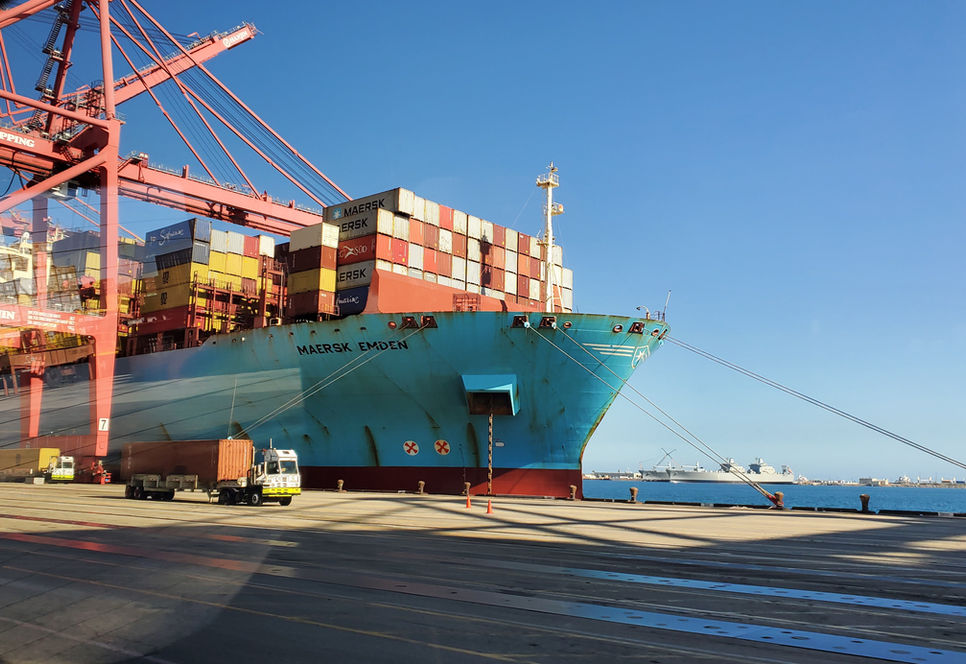
Ocean breakbulk shipments destined for Chicago can enter via the St. Lawrence Seaway directly to the Port of Chicago (Lake Michigan) or be discharged at U.S. Gulf Coast ports (e.g., Houston or New Orleans) and barged up the Mississippi and Illinois Rivers. As an FMC-licensed NVOCC, SHIPIT Logistics® issues house bills of lading, secures vessel charter space (part-charter or full-charter), coordinates ship-to-shore heavy crane operations, and arranges immediate transloading to rail or heavy-haul trucks.
For ocean freight entering the U.S., the Importer Security Filing (ISF 10+2) must be electronically submitted to U.S. Customs and Border Protection (CBP) at least 24 hours prior to the cargo being loaded onto the vessel at the foreign port of origin. Failure to file on time results in mandatory $5,000 penalties per violation and customs holds. SHIPIT Logistics® executes ISF filings and U.S. customs entry processing seamlessly as part of our integrated logistics services.
The choice between Flat Rack (FR/OT) container shipping and Breakbulk depends on cargo dimensions, weight, and lane availability:
Buyer’s Consolidation allows importers to source machinery components, electrical panels, and heavy sub-assemblies from multiple suppliers across an origin country (e.g., Europe or Asia). We receive the goods at our origin consolidation hub, combine them into single dedicated FCL or flat-rack shipments, and issue a consolidated Bill of Lading. This reduces overall ocean freight expenses, minimizes U.S. customs entry fees, and simplifies warehouse receiving in Chicago.
Standard ocean and road carrier liability is strictly limited by international conventions (such as COGSA, which caps carrier liability at $500 per package). For high-value heavy machinery, industrial plants, and transformers, we strongly advise procuring primary All-Risk Marine Cargo Insurance. Our policies cover full commercial value plus freight costs from seller’s warehouse to buyer’s foundation, including unloading, transloading, and temporary storage risks.
Connect directly with our senior project cargo directors and heavy-lift logistics engineers for comprehensive route surveys, vessel chartering rates, and customs compliance support.