

1. Executive Summary & U.S. Contract Logistics Framework
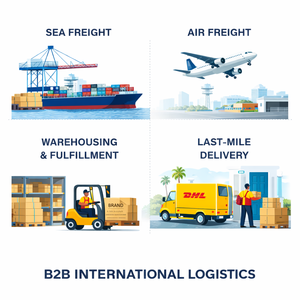
In an era of macro-economic volatility, shifting tariff regimes, and intense pressure on lead times, enterprise supply chain directors operating within the United States require more than transactional freight brokerage. Modern supply chain resilience demands an integrated Contract Logistics Manufacturer & Supplier capable of orchestrating ocean, air, drayage, and warehousing operations under single-source legal accountability and federal compliance.
Contract logistics across Trans-Pacific and global trade corridors servicing the U.S. market involves long-term strategic outsourcing of logistics management, inventory handling, customized distribution, and automated sorting infrastructure. Founded in 1974 in Los Angeles, California (originally operating as American Export Lines and expanded into SHIPIT Logistics®), our operational architecture bridges foreign manufacturing origin points directly to North American distribution networks.
By combining Federal Maritime Commission (FMC) licensed Non-Vessel Operating Common Carrier (NVOCC) status with proprietary West Coast and East Coast warehousing, automated conveyor manufacturing supply chains, and in-house U.S. Customs clearance, we eliminate operational friction. Contract logistics in the U.S. market has evolved from simple cost-per-pallet warehousing into a sophisticated compliance, data-driven, and multi-modal engineering discipline.
2. Localized U.S. Application Scenarios & Strategic Operations
Navigating the U.S. logistics ecosystem requires deep localization. The mechanics of moving freight through major ports like Los Angeles, Long Beach, New York/New Jersey, and Savannah differ vastly from European or Asian domestic transit due to unique labor structures, Class-I railroad drayage dynamics, and rigid U.S. Customs and Border Protection (CBP) mandates.
West Coast Port Transloading & Cross-Docking
For high-volume retail and industrial goods arriving at the Ports of Los Angeles and Long Beach, direct inland rail shipping can introduce demurrage risks and container chassis delay fees. Under our contract logistics framework:
- Immediate Transloading: Ocean containers (40ft/45ft HC) are drayed directly to our Los Angeles facilities within 24 hours of vessel discharge.
- 53ft Domestic Trucking Conversion: Goods are palletized and transferred into 53-foot domestic dry vans, achieving a 3:2 container consolidation ratio that cuts U.S. interstate freight costs by up to 28%.
- Demurrage Elimination: Ocean containers are returned to port terminals well within free-time windows, shielding importers from escalating storage penalties.
Automated Parcel Sortation & Amazon FBA Prep
Omnichannel brands and Amazon Sellers servicing North America face rigorous inbound compliance guidelines (prep, labeling, carton dimensions, and appointment scheduling via Carrier Central).
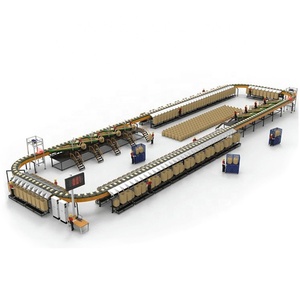
- Automated Conveyor Sortation: Implementation of high-speed parcel sorting conveyor lines capable of handling 8,000+ parcels per hour with 99.9% scanning accuracy.
- Compliance Packaging: Automated FNSKU barcoding, poly-bagging, suffocation warning application, and custom pallet building.
- Rapid Preferred Carrier Placement: Seamless injection into Amazon Regional Fulfillment Centers (FCs) across the Midwest, East Coast, and Sunbelt regions.
Time-Critical Industrial & Automotive Logistics
When assembly lines in Michigan, Ohio, or Texas face shutdown due to component shortages, standard ocean transit is unacceptable. As a TSA-licensed Indirect Air Carrier (IAC) and IATA agent:
- Charter & Next-Flight-Out (NFO): Priority uplift from major Asian/European hubs directly to Chicago (ORD), Dallas (DFW), or Atlanta (ATL).
- Wheels-Up Customs Filing: Customs entry and clearance initiated while cargo is airborne, ensuring immediate tarmac release upon touchdown.
- Dedicated Hot-Shot Trucking: Direct airport-to-factory final mile delivery utilizing team drivers for uninterrupted transit.
USMCA Cross-Border & Buyer's Consolidation
With the rapid rise of nearshoring in Mexico (Monterrey, Tijuana, Juarez) under USMCA alongside multi-factory sourcing in Asia, fragmented Less-Than-Container Load (LCL) shipments erode margins.
- Origin Buyer's Consolidation: Merging LCL purchase orders from multiple manufacturing plants into dedicated Full Container Loads (FCL) at origin hubs.
- Single Bill of Lading & Entry: Reducing U.S. Customs merchandise processing fees (MPF) and broker entry costs by 70%.
- Cross-Border Bonded Transit: Expedited overland trucking across Laredo and El Paso border gateways with pre-cleared customs documentation.
3. Key Development Trends in the U.S. Localized Logistics Market
The United States contract logistics landscape is undergoing a structural paradigm shift driven by technological convergence, regulatory oversight, and sustainability directives. Enterprise procurement teams must align with suppliers capable of anticipating these trends:
Smart Warehouse Automation
Rising labor costs in traditional U.S. logistics hubs (Inland Empire, CA; Dallas-Fort Worth, TX; Lehigh Valley, PA) have accelerated the adoption of automated material handling equipment. Integrated parcel sorting conveyors, autonomous mobile robots (AMRs), and dynamic dimensioning systems are now mandatory to meet same-day/next-day SLAs.
CBP Compliance & Tariff Engineering
With heightened U.S. Customs scrutiny surrounding Section 301 tariffs, Uyghur Forced Labor Prevention Act (UFLPA) audit trails, and strict Importer Security Filing (ISF 10+2) enforcement, contract suppliers must provide complete origin-to-destination data transparency and legal compliance mechanisms.
ESG & Scope 3 Carbon Auditing
Fortune 500 corporations operating in the U.S. market now mandate carbon accounting across their supply chains. Modern contract logistics partners must offer intermodal optimization (rail vs. truck shift), electric drayage fleet options, and automated Scope 3 greenhouse gas (GHG) reporting per shipment lane.
4. Enterprise Advantages: Why Partner with SHIPIT Logistics®
In an un-credentialed logistics market plagued by digital freight brokers lacking physical asset backstops, SHIPIT Logistics® delivers over five decades of verifiable operational expertise, federal authority, and asset-backed infrastructure.
Fully Licensed & Verified Federal Credentials
Unlike unverified intermediaries, every shipment handled by our organization is backed by publicly auditable government registrations:
- FMC-Licensed Ocean Transportation Intermediary: OFF & NVOCC Org# 004869, License# 001803. We issue our own legally binding House Bills of Lading (HBL).
- IATA/CNS Licensed Air Forwarder: Code# 01134480012 & TSA Certified Indirect Air Carrier (IAC) for secure air freight uplift.
- FMCSA Licensed Property Broker & Forwarder: USDOT# 2629896, MC-910043, Freight Forwarder License FF# 53067.
- Hazmat & Dangerous Goods Certified: Full compliance across sea, air, and highway under IMDG, ICAO, IATA, and DOT 49 CFR.
Direct Service Contracts with Top Steamship Lines
We leverage long-standing service agreements with premier ocean carriers to secure space, rate stability, and priority discharge:
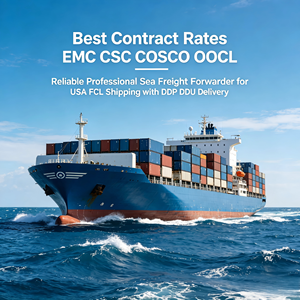
- Direct service contract allocations with EMC (Evergreen), COSCO Shipping, OOCL, ONE, and Maersk.
- Fixed-rate stability during volatile peak shipping seasons (Q3/Q4 pre-holiday surge).
- Flexible spot and contract pricing options tailored to volume predictability (FCL and LCL).
- Integrated DDP (Delivered Duty Paid) and DDU (Delivered Duty Unpaid) door-to-door execution across North America and Europe.
5. Frequently Asked Questions (U.S. Procurement & Logistics Insights)
Detailed technical responses to common operational questions asked by U.S. procurement executives, supply chain managers, and import compliance officers.
The Importer Security Filing (ISF 10+2) must be transmitted to U.S. Customs and Border Protection (CBP) at least 24 hours prior to the cargo being loaded onto the vessel at the foreign port of origin. The 10 required data elements from the importer include Manufacturer/Supplier Name/Address, Seller Name/Address, Buyer Name/Address, Ship-to Name/Address, Container Stuffing Location, Consolidator Name/Address, Importer of Record Number, Consignee Number, Country of Origin, and Commodity HTSUS Number. Failure to file accurately or on time results in liquidated damages penalties of $5,000 per violation from CBP. SHIPIT Logistics manages ISF filings in-house alongside our customs brokerage service.
As a general operational rule, Less-Than-Container Load (LCL) is priced on a volume/weight basis (per CBM or 1,000 kg). When your total cargo volume reaches approximately 13 to 15 CBM (about half of a standard 20-foot dry container), the total cost of LCL ocean freight, origin co-loader fees, destination de-consolidation fees, and CFS handling typically equals or exceeds the flat rate of a dedicated 20ft Full Container Load (FCL). Furthermore, FCL eliminates intermediate handling, reduces port dwell times by 3 to 5 days, and significantly lowers cargo damage risk.
A licensed Non-Vessel Operating Common Carrier (NVOCC) is regulated by the Federal Maritime Commission under the U.S. Shipping Act. An NVOCC acts as a carrier to the actual shipper—issuing its own House Bills of Lading, publishing tariffs, assuming carrier cargo liability, and entering into direct ocean carrier contract rates. A standard freight broker simply acts as an agent connecting shippers with carriers without issuing transport documents or assuming carrier responsibility. Partnering with an NVOCC provides direct legal protection, fixed contract rates, and single-source accountability.
When an importer purchases goods from multiple factories across a region (e.g., South China, Ningbo, or Southeast Asia), shipping separate LCL parcels results in duplicated destination terminal charges, multiple customs entry fees, and fragmented delivery schedules. Buyer's Consolidation collects POs from all vendors at a central origin warehouse, combines them into one dedicated FCL container, and dispatches a single ocean shipment. This reduces unit transport costs by up to 35%, reduces U.S. customs entry line-item fees, and streamlines receiving operations at your domestic warehouse.
Automated logistics sorting equipment—such as cross-belt sorters, pop-up wheel sorters, and linear belt conveyors—interfacing directly with Warehouse Management Systems (WMS) via API/EDI. Incoming cartons are dynamically scanned by multi-directional barcode cameras, weighed, dimensioned, and diverted to designated carrier chutes (FedEx, UPS, USPS, DHL) or regional carrier zones in under 1.2 seconds per parcel. Incorporating this equipment into contract logistics fulfillment centers reduces manual labor overhead by up to 60% while expanding order cutoff times for e-commerce brands.
Under Delivered Duty Paid (DDP), the seller/exporter assumes complete financial and operational responsibility for delivering cargo to the buyer's designated door in the U.S., including international freight, insurance, U.S. Customs clearance, Harbor Maintenance Fee (HMF), Merchandise Processing Fee (MPF), and all applicable customs duties/tariffs. Under DDU (Delivered Duty Unpaid, or DAP), the seller pays freight to the destination address, but the U.S. buyer remains responsible for paying import duties, taxes, and handling customs entry paperwork. DDP provides U.S. buyers with a land-cost guarantee with zero customs complexity.
Optimize Your U.S. Supply Chain Infrastructure Today
Connect directly with our senior contract logistics specialists to review contract rates, customs compliance strategies, or automated sorting equipment catalogs.