
Explore our vetted portfolio of specialized cross-border trade compliance services, risk-mitigation auditing, and customs clearance support designed for global corporate buyers and high-volume exporters.
 Document Audit
Comprehensive commercial invoice handling, HTS code mapping, and customized entry documentation tailored for international freight protocols.
 Global Import/Export
End-to-end import and export compliance orchestration preventing customs holds, port demurrage, and regulatory entry rejections.
 Quality Assurance
On-site factory quality verification, product safety testing, brand compliance checks, and detailed factory audit reporting prior to export dispatch.
 E-Commerce Sellers
Turnkey customs filing solutions optimized for Amazon FBA, cross-border e-commerce platforms, and multi-channel fulfillment operations.
 Risk Mitigation
Corporate buyer protection, legal supplier vetting, contract enforcement, and risk-free purchasing management across Chinese hubs.
 UK / EU Gateway
Full compliance with post-Brexit CDS filing, EU import standards, duty deferment accounts, and UK shop delivery frameworks.
 ESG & Testing
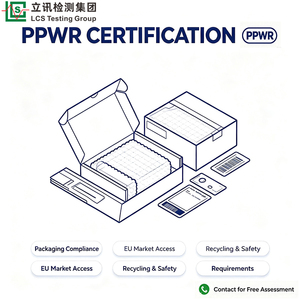
Full certification for EU Packaging and Packaging Waste Regulations (PPWR), EPR registration, chemical analysis, and Declaration of Conformity (DoC).
 Australian Market
Avoid common Australian Border Force (ABF) entry delays, biosecurity (BICON) hazards, and local consumer product standard non-compliance risks.
Navigating the global trade ecosystem in 2026 and beyond requires far more than basic freight forwarding or transactional logistics. As international regulatory frameworks tighten across major import jurisdictions—such as the European Union, the United States, the United Kingdom, and Australia—importers and enterprise procurement managers face unprecedented scrutiny. Compliance non-conformity no longer results in minor administrative delays; it triggers severe customs seizures, catastrophic supply chain blockades, hefty financial penalties, and irreversible brand damage.
As a leading authority in international trade compliance and licensed freight forwarding, our organization bridges the gap between complex East-Asian manufacturing supply chains and rigorous Western legal mandates. This comprehensive whitepaper outlines the essential structural shifts, mandatory compliance protocols, and strategic procurement frameworks necessary to establish a zero-risk sourcing pipeline from China.
Information Gain Benchmark: Modern trade compliance is no longer a reactive post-shipment activity. It must be integrated into product design, supplier contracting, packaging selection, and pre-departure digital documentation filings.
The European Union's aggressive ESG rollout has reshaped the rules of engagement for Chinese exporters and European buyers. The implementation of the Packaging and Packaging Waste Regulation (PPWR) alongside expanded Extended Producer Responsibility (EPR) laws requires every exporter to demonstrate full circular economy compliance. Crucially, imports are now scrutinized for harmful substances, including PFAS ("forever chemicals") and heavy metals (lead, cadmium, mercury, hexavalent chromium).
To successfully clear EU customs, shipments must be accompanied by verified laboratory testing reports and a formal Declaration of Conformity (DoC). Failure to submit compliant digital product documentation at the port of entry results in immediate shipment rejection and mandatory destruction at the importer's expense.
For U.S.-bound cargo, U.S. Customs and Border Protection (CBP) enforces strict pre-loading mandates. The Importer Security Filing (ISF 10+2) must be accurately transmitted to CBP at least 24 hours before cargo is physically loaded onto a ocean vessel in Chinese ports such as Shanghai, Ningbo, or Shenzhen. Furthermore, with the aggressive enforcement of the Uyghur Forced Labor Prevention Act (UFLPA) and dynamic Section 301 tariff shifts, complete supply chain traceability—from raw material origin to final assembly—is mandatory to clear customs without administrative holds.
Strategic foresight for corporate buyers: how artificial intelligence, regulatory evolution, and sustainability directives are transforming cross-border sourcing.
Mandatory digital QR and blockchain tracking embedded into cross-border product packaging, detailing material composition, carbon intensity, and ethical sourcing proof directly for customs authorities.
Transition from manual HS code assignment to real-time AI tariff calculation engines, minimizing human error, optimizing duty drawbacks, and eliminating misclassification fines.
Shift toward third-party pre-shipment quality assurance (QA) conducted at factory loading docks. Importers demand live video inspection and lab-grade chemical checks before balance payments are released.
Operating as an enterprise trade compliance service provider requires deep institutional knowledge, robust operational infrastructure, and official government accreditations. Backed by over 50 years of operational experience since our origin in 1974, we deliver an end-to-end management network that guarantees regulatory compliance across ocean, air, and overland transportation modes.
Instead of shipping fragmented LCL lots from multiple factories across Zhejiang, Jiangsu, and Guangdong, our origin warehousing hubs combine your purchase orders into single full container loads (FCL). This drastically cuts ocean freight costs, simplifies customs entries, and lowers per-unit compliance handling overhead.
Our dedicated warehousing facilities near major port gateways (including Los Angeles, Long Beach, and East Coast hubs) provide transloading, cross-docking, e-commerce fulfillment, and specialized Amazon FBA preparation under strict customs supervision.
Each sovereign market enforces unique technical trade barriers. A single oversight in destination documentation can stall cargo for weeks, incurring thousands of dollars in daily port storage charges. Below is an operational breakdown of key regional compliance standards every China exporter must master:
Following the UK’s complete transition to the Customs Declaration Service (CDS), legacy CHIEF declarations are obsolete. Chinese exporters supplying UK shop networks or Amazon UK warehouses must ensure accurate Duty Deferment Category codes, VAT EORI registration, and precise commodity code mapping to avoid shipment rejection at Dover or Felixstowe.
Australia maintains some of the world's strictest biosecurity controls. Shipments containing timber, organic fibers, or machinery require mandatory BMSB (Brown Marmorated Stink Bug) treatment certificates during designated seasons. Furthermore, consumer product safety standards enforced by the ACCC require pre-departure compliance testing to prevent costly market recalls.
Imports of toys, electronics, and apparel are subject to rigorous CPSC (Consumer Product Safety Commission) oversight. Any product utilizing lithium batteries or regulated chemical formulations must comply with strict IATA/IMDG Dangerous Goods documentation, hazard labeling, and UN38.3 battery testing reports prior to vessel booking.
Expert answers to critical trade compliance, regulatory filing, and customs brokerage queries faced by international procurement executives.
Connect with our senior trade compliance directors to design a custom risk-mitigation framework, optimize duty structures, and ensure zero-delay customs clearance worldwide.
Contact Us