Direct sourcing, turn-key warehousing hardware, and FMC-licensed door-to-door ocean freight management.


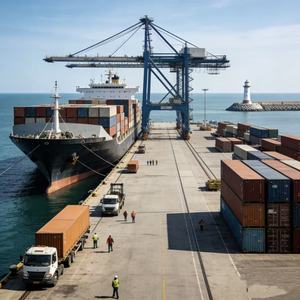
In the contemporary B2B international trade ecosystem, port logistics serves as the vital nervous system connecting heavy manufacturing nodes, intermodal transport networks, and global consumer markets. Modern maritime logistics extends far beyond raw container shipping; it encompasses intelligent terminal handling equipment, automated order sorting infrastructure, structural warehousing systems, and fully compliant NVOCC (Non-Vessel Operating Common Carrier) ocean freight management.
Global logistics executives face compounding challenges in 2026: volatile spot freight rates, stringent decarbonization mandates (IMO 2030/2050), complex customs protocols such as U.S. Customs Importer Security Filing (ISF 10+2), and port dwell-time volatility. Mitigating these systemic bottlenecks demands a strategic partnership with top-tier port logistics manufacturers and licensed 3PL/4PL logistics integrators.
Evaluating landed costs through direct carrier contracts, duty drawdown optimization, and elimination of demurrage/detention charges at major container terminals.
Strict adherence to FMC (Federal Maritime Commission), TSA Indirect Air Carrier standards, and IMDG/IATA hazardous material safety protocols.
Deploying XY-axis parcel sorting put-walls and heavy-duty prefabricated steel structural distribution hubs directly adjacent to primary deep-water ports.
Comprehensive evaluation of leading global port equipment manufacturers, NVOCC forwarding leaders, and terminal system integrators.
| Manufacturer / Supplier Name | Primary Core Competency | Key Regulatory Certifications | Global Coverage Footprint | Ideal Procurement Use-Case |
|---|---|---|---|---|
| SHIPIT Logistics (American Export Lines) | FMC-Licensed NVOCC, Ocean FCL/LCL, Buyer's Consolidation & Transloading | FMC OTI #001803, IATA/CNS, TSA IAC, FMCSA USDOT #2629896 | 150+ Countries (HQ: Los Angeles, USA) | Turn-key DDP/FCL door-to-door ocean freight & bi-coastal U.S. warehousing |
| Zhenhua Port Machinery (ZPMC) | Heavy Port Machinery, Ship-to-Shore (STS) Cranes & Automated Stacking Cranes | ISO 9001, CE, AWS Welding Certification | Global Terminal Installations (100+ Countries) | Port operators needing mega-vessel container handling equipment |
| Konecranes Port Solutions | Rubber-Tired Gantry (RTG) Cranes & Automated Terminal Software | ISO 14001, OHSAS 18001, CE Directives | Worldwide Maritime Ports | Eco-efficient hybrid and electric terminal yard operations |
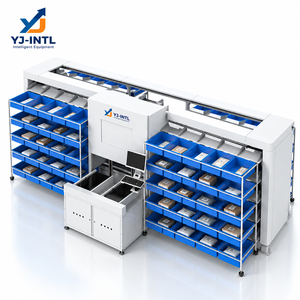
| Intelligent Warehousing Automation Co. | Automated Put-Wall Sorting Systems (50-200 Ports XY Axis Sorters) | CE, ISO 9001, UL Electrical Standards | North America, Europe, Asia-Pacific | High-throughput ecommerce fulfillment & parcel sorting in port warehouses |
| Q355B Heavy Steel Construction Group | Prefabricated Large-Scale Steel Logistics Warehouses & Dock Facilities | CE Marking, EN 1090 Structural Steel, ISO 3834 | Global Industrial Parks & Free Trade Zones | Rapid construction of port-side 3PL distribution and cross-dock hubs |
| Cargotec / Kalmar Global | Terminal Tractors, Reachstackers & Container Handling Solutions | ISO 9001, EU Stage V Emissions Compliance | Over 120 Countries Worldwide | Medium-to-large container yard horizontal transport automation |
| Liebherr Maritime Cranes | Mobile Harbor Cranes, Offshore Cranes & Floating Terminal Cranes | DIN EN ISO 9001, DNV-GL Marine Safety | Global Sea Ports & Waterways | Flexible bulk cargo and container handling in multi-purpose ports |
| Shenzhen Maritime Freight Forwarding Network | Direct Asia-to-Americas Priority Sea Freight & DDP Custom Clearances | China NVOCC Registration, FMC Overseas Agent | Asia-North America & South America Trade Lanes | FCL/LCL buyer's consolidation from major South China ports |
| Barcelona Port Logistics Systems | European Gateway Ocean Shipping, 20GP/40HQ FCL & Feeder Services | Authorized Economic Operator (AEO), ISO 28000 | Southern Europe, Mediterranean & Latin America | Cross-border Mediterranean trade door-to-door distribution |
| Middle East Container Hub Logistics | Oman/Dubai Gateway Freight Forwarding & GCC Intermodal Routing | Local Customs Clearance License, FIATA Member | Middle East, North Africa, Subcontinent | Complex transshipment cargo routing through Dubai & Oman maritime hubs |
Key technological, environmental, and structural shifts driving global B2B procurement decisions over the next decade.
Port-adjacent logistics hubs are undergoing a dramatic transformation toward robotic automation. Custom XY-axis parcel put-wall sorters featuring 50 to 200 high-speed ports allow 3PL providers to process e-commerce orders directly upon container debarkation. This reduces order cycle times from days to hours while lowering labor overhead by up to 60%.
Building flexible, durable, and cost-effective distribution facilities near port terminals is critical for overcoming port congestion. Modern procurement relies heavily on CE-certified Q355B large-scale prefabricated steel structures that enable rapid erection of heavy-duty cross-docking centers and turn-key dock management infrastructure.
Enterprise shippers are increasingly mandated to audit Scope 3 carbon emissions across their international freight operations. Leading NVOCC forwarders now offer detailed carbon tracking and offset programs, enabling compliance with EU ETS and IMO decarbonization frameworks without compromising transit reliability.
Rather than shipping fragmented LCL (Less than Container Load) packages, modern enterprise importers utilize origin-side Buyer's Consolidation. By aggregating purchase orders from dozens of factories into single FCL (Full Container Load) units at origin port warehouses, buyers reduce ocean freight expenses by 30-45% and simplify customs entries.
Selecting the right port logistics manufacturer or freight forwarding partner requires rigorous due diligence. Failing to verify licenses or improperly classifying customs tariffs leads to severe financial penalties, container seizures, and costly supply chain shutdowns.
Always confirm your ocean forwarder maintains active federal credentials. Look for an official FMC Ocean Transportation Intermediary (OTI) license, NVOCC registration, IATA/CNS air cargo licensing, and TSA Indirect Air Carrier approval. Verifiable license numbers (such as FMC Org# 004869) guarantee legal standing and carrier space access.
For U.S.-bound ocean freight, Importer Security Filing (ISF 10+2) must be transmitted to U.S. Customs and Border Protection at least 24 hours prior to vessel departure at origin ports. Ensure your forwarder executes in-house customs brokerage to eliminate costly $5,000 CBP late-filing fines.
Determine whether DDP (Delivered Duty Paid), FOB (Free on Board), or Port-to-Port shipping best fits your risk profile. DDP provides total cost predictability by wrapping ocean freight, customs duties, drayage, and final door delivery into one clear invoice.
Originally established in Los Angeles in 1974 as American Export Lines and rebranded as SHIPIT Logistics®, we represent the gold standard in global supply chain execution.
We operate under complete, publicly verifiable federal licenses, providing enterprise clients with absolute legal security across ocean, air, and ground modes:
With primary facilities situated on both U.S. coasts (including Los Angeles, CA), we provide direct port-adjacent transloading, cross-docking, Amazon FBA preparation, and nationwide drayage networks.
Expert guidance on ocean freight, customs compliance, equipment manufacturing, and port logistics solutions.
Full Container Load (FCL) reserves an entire 20GP, 40GP, or 40HQ container exclusively for your cargo, minimizing handling and providing fast transit times. Less than Container Load (LCL) consolidates shipments from multiple buyers into a shared container. As a general rule of thumb, LCL is more economical for smaller volumes under 15 CBM, whereas FCL becomes cost-effective as cargo volume approaches half of a 20-foot container or more.
An FMC-licensed NVOCC (Non-Vessel Operating Common Carrier) issues its own House Bills of Lading (HBL) and negotiates service contracts directly with ocean vessel lines. This allows shippers to secure competitive volume pricing, flexible space allocations during peak sea freight seasons, and full legal recourse under U.S. maritime regulations.
Intelligent order put-walls featuring 50-200 ports use high-speed XY-axis sorting technology to automatically direct deconsolidated container items into specific order bins. This technology eliminates manual picking errors, increases parcel processing speeds by over 300%, and speeds up distribution from seaport warehouses directly to end customers or Amazon FBA centers.
For all ocean freight shipments entering U.S. ports, the ISF must be submitted to U.S. Customs and Border Protection (CBP) at least 24 hours prior to cargo loading onto the vessel at the foreign port of departure. Failure to meet this strict deadline results in mandatory $5,000 penalties per shipment and severe customs holds.
Buyer's consolidation brings together goods purchased from multiple suppliers at an origin port warehouse (such as main ports in South China) and combines them into one unified FCL shipment. Importers avoid paying multiple LCL receiving fees, reduce total ocean freight rates per cubic meter, streamline customs documentation, and simplify cargo receipt at destination.
Yes. Certified freight forwarders manage hazardous materials by sea, air, and road under strict IATA, ICAO, IMDG, and DOT 49 CFR regulations. Additionally, specialized project cargo teams handle oversized, breakbulk, and out-of-gauge equipment utilizing flat-rack containers and heavy-lift vessel charters globally.