
In an era defined by fluctuating tariff structures, tightened U.S. Customs and Border Protection (CBP) enforcement, and complex cross-border documentation standards, selecting an accredited import clearance supplier is no longer a peripheral operational choice—it is a core risk-mitigation strategy.
Global buyers and procurement executives face unprecedented friction at major maritime entry points such as Los Angeles, Long Beach, Rotterdam, Valencia, and Hamburg. The shift toward non-intrusive inspection (NII) technologies, strict enforcement of ISF 10+2 filings, and evolving duty frameworks (such as Section 301 tariffs and the EU Carbon Border Adjustment Mechanism) require clearance agents to operate not merely as logistics coordinators, but as licensed compliance architects.
This benchmark whitepaper analyzes the Top 10 Import Clearance Suppliers & Exporters globally, highlighting their operational networks, multimodal capabilities, DDP (Delivered Duty Paid) service scope, and specialized customs compliance expertise. Below, we break down top-tier service providers, emerging logistics corridors, and technical frameworks designed to eliminate demurrage, minimize detention, and ensure seamless customs release.
Comprehensive evaluation of elite freight forwarders, NVOCCs, and customs clearance providers serving major trade corridors across North America, Europe, and Asia.
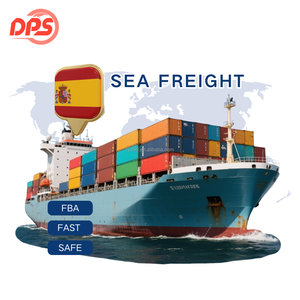
Specialized Iberian clearance framework operating directly out of Port of Valencia. Facilitates automated T1 transit documentation, EU intra-community fiscal clearance, and expedited FCL container drayage across Spain and Southern Europe.
Get Catalog
End-to-end multimodal logistics architect specializing in high-volume trade lanes connecting China, India, Southeast Asia, and Western trade gateways. Full capability for air express and ocean container dispatch.
Get Catalog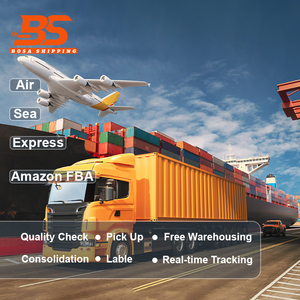
Time-critical express air freight and customs entry for North American destinations. Features certified handling of hazardous materials (Hazmat), full marine cargo insurance, and expedited clearance through U.S. and Canadian ports of entry.
Get Catalog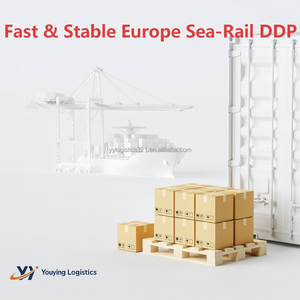
Turnkey DDP solution designed specifically for e-commerce, dietary supplements, and retail products entering European trade zones. Integrates origin consolidation, bonded warehousing, customs duties prepay, and last-mile logistics.
Get Catalog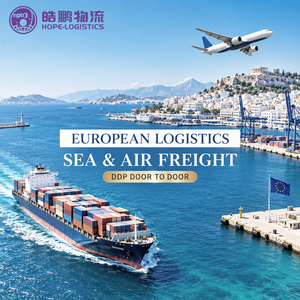
Hybrid LCL consolidation and express distribution model optimized for post-Brexit UK and EU clearance regulations. Minimizes freight expenditure for mid-volume importers while ensuring full compliance with national tax authorities.
Get Catalog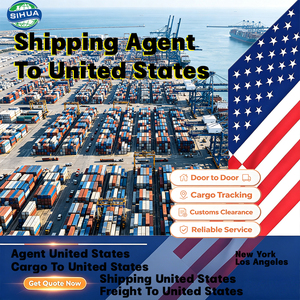
Comprehensive maritime transport combined with heavy-duty overland haulage and transloading. Ideal for industrial equipment, bulk commodity imports, and multi-state inland port distribution under single-bill documentation.
Get Catalog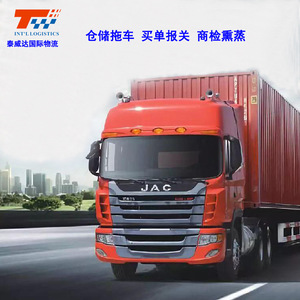
Direct operational presence in Port of Shanghai (Yangshan & Waigaoqiao) and Pudong International Airport (PVG). Provides swift origin declaration, export licensing verification, and bonded warehouse storage for international trade flows.
Get Catalog
Cross-border logistics architecture tailored for high-compliance G7 markets (USA, Canada, UK, Germany, France, Italy). Features pre-arrival clearance, automated HTS classification guidance, and rapid customs release.
Get Catalog
Premier U.S. ocean transport intermediary and licensed customs brokerage (Est. 1974). Direct automated integration with U.S. Customs ACE system, remote location filing (RLF), ISF 10+2 pre-filing, and nationwide bonded warehouse distribution.
Get Catalog
End-to-end supply chain orchestration featuring real-time container tracking, automated duty estimates, palletization, FN-SKU labeling, and compliant final-mile delivery to Amazon fulfillment centers across North America and Europe.
Get CatalogKey compliance metrics and operational indicators supply chain directors must evaluate when sourcing licensed forwarders and customs brokers.
| Supplier Benchmark Metric | Standard Forwarder | Tier-1 Licensed Clearance Exporter (e.g., SHIPIT) | Impact on Importer Landed Cost |
|---|---|---|---|
| Customs Brokerage Authority | Third-party outsourced customs brokers | In-house Licensed Customs Brokers & FMC NVOCC | Reduces clearance delays by 24–48 hours; avoids third-party markup fees. |
| ISF (10+2) Filing Guarantee | Manual entry submission close to deadline | Automated submission >24 hrs prior to vessel loading | Eliminates U.S. CBP liquidated damages penalties ($5,000 per violation). |
| Duty Mitigation & HTS Auditing | Basic tariff code lookup | Advanced tariff engineering & Chapter 98 review | Saves 3%–15% on total duty liabilities through compliant classification. |
| Bonded Infrastructure | Standard commercial storage | Class 2/3 Bonded Warehouses & FTZ Accessibility | Defers duty payment until final domestic distribution. |
| Hazmat / DG Accreditation | Requires third-party hazmat certifiers | Certified IATA, IMDG, DOT 49 CFR dangerous goods team | Prevents hazardous cargo holds and expensive port fines. |
How structural shifts in international trade regulations and artificial intelligence are transforming import compliance.
Traditional manual bill-of-lading processing is being rapidly superseded by optical character recognition (OCR) and machine-learning models trained on national tariff databases. Automated classification engines parse multi-line commercial invoices in seconds, matching goods against complex HTS rules to execute error-free pre-entry filing.
As enterprise importers diversify away from single-source manufacturing, trade corridors across Southeast Asia (Vietnam, Indonesia), India, and Mexico (USMCA highway routes) are experiencing explosive growth. Import brokers are expanding cross-border trucking infrastructure and regional customs nodes to facilitate rapid overland clearance.
Environmental accountability is becoming an integral part of customs documentation. European implementations like CBAM (Carbon Border Adjustment Mechanism) require importers to submit detailed carbon emission profiles per ton of imported steel, aluminum, or chemicals. Forwarders are integrating CO2 telemetry directly into shipping documents.
Over 50 years of institutional trade experience, backed by direct federal credentials and dual-coast U.S. logistics hubs.
Established in Los Angeles in 1974 (originally American Export Lines), SHIPIT Logistics brings five decades of continuous operation. Our veteran customs brokers maintain an average tenure exceeding 10 years, offering deep insight into regulatory nuances.
We eliminate middleman vulnerabilities by holding direct federal authority across sea, air, and ground logistics. Publicly verifiable credentials ensure your cargo is handled by an authorized entity.
With modern warehousing complexes strategy located near Port of Los Angeles / Long Beach and major East Coast ports, we handle transloading, crossdocking, buyer's consolidation, and direct Amazon FBA prep seamlessly.
Do not leave your international freight to unverified brokers. Our corporate group operates under strict federal oversight:
Expert answers to essential questions regarding international customs clearance, risk management, and freight routing.
An Non-Vessel Operating Common Carrier (NVOCC) is licensed by the Federal Maritime Commission (FMC) to issue its own House Bills of Lading (HBL), enter into direct carrier service contracts with ocean lines, and set independent tariff rates. Unlike a non-licensed forwarder who acts purely as an agent, an NVOCC assumes full carrier liability for ocean transport. This enables importers to secure better ocean freight rates, fixed vessel allocations during peak seasons, and unified legal accountability.
For ocean freight destined for the United States, U.S. Customs and Border Protection (CBP) mandates that the ISF 10+2 filing must be transmitted at least 24 hours prior to the cargo being loaded onto the vessel at the foreign port of lading. Failure to meet this strict deadline results in immediate liquidated damages penalties of $5,000 per late submission, along with severe customs inspection holds upon vessel arrival. SHIPIT Logistics manages ISF filings electronically to guarantee timely compliance.
Buyer's consolidation involves collecting smaller purchase orders from multiple factories or suppliers across a region (e.g., Eastern China or Northern India) into a single centralized bonded warehouse. These smaller LCL lots are combined into one Full Container Load (FCL). By shipping one FCL container instead of multiple LCL shipments, importers significantly lower per-CBM ocean rates, reduce origin handling fees, consolidate customs entry paperwork into a single bill, and simplify destination drayage.
Under DDP (Delivered Duty Paid), the exporter/seller bears all risks, freight costs, import clearance duties, and local taxes. This provides the buyer with maximum convenience and a fixed landed cost, but limits the buyer's control over customs classification accuracy. Under DAP (Delivered at Place), the buyer handles customs entry using their own licensed broker. For high-volume or regulated goods, DAP or FOB is often preferred by experienced procurement teams to ensure compliant duty calculation and leverage local brokerage relationships.
Standard import clearance across major global ports requires five baseline documents:
Connect with our licensed customs brokerage team for a complimentary tariff audit, freight quote, or comprehensive clearance catalog.
Get Catalog