
Turnkey maritime, air, and multimodal routing backed by licensed U.S. customs clearance and global buyer's consolidation.
Time-critical express air freight charter & scheduled cargo routing. Includes automated customs clearance filing, real-time telemetry, and airport-to-door delivery.
High-capacity FCL & LCL ocean consolidation operating across major transpacific and Asia-Europe lanes. Direct carrier allocation with fixed rate contracts.
Direct airport discharge at Brussels South Charleroi with pre-cleared EU customs entry. Zero buyer tax friction under Duty Delivery Paid terms.
Certified IATA/IMDG Class 1-9 hazmat shipping agent. Complete MSDS review, UN-compliant packaging, and fast-track customs brokerage.
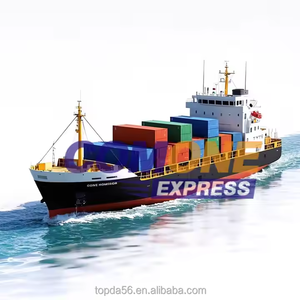
Dedicated transpacific ocean routing serving LA & Long Beach ports. Seamless bonded transloading, crossdocking, and final-mile drayage across North America.
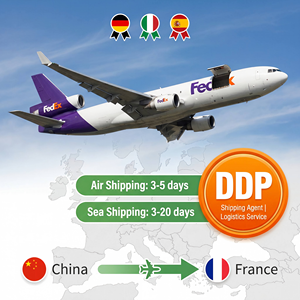
Integrated multimodal sea-air DDP freight networks. Full vat-deferment compliance, automated duty calculation, and scheduled fulfillment delivery.
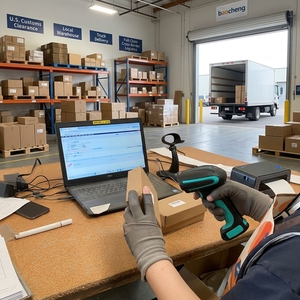
Pre-arrival ISF (10+2) electronic filing, HTS classification audit, and entry summary processing to prevent port demurrage and customs delays.

Turnkey global supply chain management for high-volume enterprise importers. Includes bonded warehousing, e-commerce FBA prep, and 3PL distribution.
In an era marked by shifting trade policies, fluctuating container yield rates, and heightened customs enforcement, global procurement managers cannot treat logistics as a commoditized afterthought. Partnering with a premier China Freight Brokerage Manufacturer & Supplier requires an analytical evaluation of regulatory credentials, multi-modal routing optionality, and risk-mitigated customs infrastructure. Founded in 1974 as American Export Lines and expanded as SHIPIT Logistics®, our entity bridges the operational divide between East Asian manufacturing hubs and global distribution networks through licensed, asset-backed logistics engineering.
Key Information Gain Takeaway: Unlike non-vessel assetless intermediaries, an FMC-licensed Non-Vessel Operating Common Carrier (NVOCC Org# 004869, License# 001803) maintains legal authority to issue proprietary House Bills of Lading (HBL), negotiate direct carrier volume contracts (SCFA), and execute binding door-to-door DDP tariffs with zero regulatory friction.
The architecture of transpacific and Asia-Europe freight transportation has migrated from simple port-to-port maritime shipping toward integrated 3PL and 4PL frameworks. Procurement professionals sourcing heavy machinery, consumer electronics, dangerous goods (hazmat), and retail inventories across Chinese industrial clusters—such as the Pearl River Delta, Yangtze River Delta, and Bohai Economic Rim—face complex choices between Full Container Load (FCL), Less than Container Load (LCL) consolidation, and time-critical Air Freight charters.
Working with a seasoned freight broker provides direct leverage over ocean carrier space allocations. During peak shipping surges or blank sailing cycles, non-licensed forwarders experience container roll-overs and unpredictable spot-rate surges. Conversely, an established NVOCC utilizes pre-allocated vessel slots across major alliances (2M, Ocean Alliance, THE Alliance), ensuring space guarantees from major loading ports including Shanghai, Ningbo-Zhoushan, Shenzhen (Yantian/Shekou), Qingdao, and Guangzhou (Nansha).
Modern supply chains demand fluid transitions between transport modes to optimize the cost-to-transit ratio. Our multimodal architecture leverages three distinct transit tiers:
Importers must maintain absolute adherence to destination customs regimes. Our in-house brokerage manages critical compliance filings:
• U.S. ISF (10+2) Mandatory Filing: Electronically submitted 24+ hours prior to vessel loading at Chinese origin to eliminate $5,000+ CBP liquidated damage penalties.
• HTS Code Optimization: Professional tariff audit ensuring correct Harmonized Tariff Schedule classification and duty minimization under Section 301 rules.
• Bonded Transloading & Drayage: Immediate port-intermodal clearance at Los Angeles/Long Beach into dual-coast 3PL distribution centers.
How digital logistics integration, regulatory evolutions, and ESG mandates are reshaping China-to-Global cargo movement over the next decade.
The historical reliance on FOB (Free on Board) terms is rapidly giving way to enterprise Delivered Duty Paid (DDP) sourcing models. Modern buyers demand absolute cost certainty before cargo departs Chinese ports. Advanced freight brokerage combines ocean tariffs, terminal handling charges (THC), destination customs duties, harbor maintenance fees (HMF), and final-mile liftgate delivery into a single predictable line-item tariff.
Predictive supply chain analytics now replace manual tracking emails. Future-ready brokers integrate IoT sensor data and AI dispatch algorithms to provide real-time location, temperature monitoring for sensitive cargo, and predictive ETA metrics. This transparency empowers e-commerce brand owners and industrial manufacturers to synchronize inventory replenishment with pinpoint accuracy.
Institutional importers in the US and EU face stringent Scope 3 emissions reporting standards. Global freight brokerage requires integrated carbon accounting. By optimizing modal selection—shifting urgent freight from air to ocean-express, or utilizing intermodal rail over long-haul trucking—shippers achieve up to a 65% reduction in cargo carbon footprint without compromising distribution timelines.
Building a resilient international trade supply chain requires an operational partner backed by decades of proven execution, strict legal compliance, and owned physical asset infrastructure. Operating since 1974, SHIPIT Logistics® offers an unparalleled value proposition for enterprise procurement executives across 150+ countries.
Unlike unverified digital brokers or foreign freight agents, our company operates under strict oversight of U.S. Federal Transportation Agencies:
Supply chain efficiency depends heavily on origin consolidation and destination speed. We maintain proprietary and contract warehouse networks on both U.S. coasts:
Expert answers to critical operational, legal, and pricing questions asked by international supply chain directors.
A standard freight forwarder acts primarily as an agent arranging transport. An FMC-licensed NVOCC (Non-Vessel Operating Common Carrier) acts as a legal carrier—issuing its own House Bills of Lading, assuming carrier liability, and locking in direct ocean contract rates with vessel operators. A licensed Freight Broker (FMCSA licensed) manages landside drayage and highway trucking. SHIPIT Logistics® holds all three credentials, delivering end-to-end legal accountability from factory floor in China to final warehouse door in North America or Europe.
As a general rule of thumb, LCL is most cost-effective for cargo volumes under 13 to 15 Cubic Meters (CBM). Once your shipment approaches 15 to 20 CBM (or approximately half of a standard 20-foot GP container), booking a dedicated 20FT FCL becomes financially advantageous. FCL eliminates origin consolidation handling, reduces risk of cargo damage, speeds up port discharge by 3-5 days, and avoids destination co-loader deconsolidation fees.
The Importer Security Filing (ISF 10+2) must be submitted electronically to U.S. Customs and Border Protection (CBP) at least 24 hours before the container is physically loaded onto the vessel at the Chinese port of loading. Failure to file on time results in mandatory $5,000 penalties per late entry from CBP, accompanied by customs holds and port demurrage. Our in-house brokerage automates ISF submission upon commercial invoice verification.
If you purchase goods from multiple Chinese manufacturers across Ningbo, Shenzhen, and Shanghai, shipping individual LCL orders generates multiple origin handling fees, separate customs entries, and elevated freight rates. Under our Buyer's Consolidation service, cargo from all suppliers is received at our origin warehouse, inspected, and consolidated into a single FCL container. This reduces per-unit ocean freight costs by up to 35% and streamlines customs entries into one single HBL.
Yes. SHIPIT Logistics® is fully certified for Dangerous Goods (Hazmat Class 1-9) transportation under IATA (air), IMDG (maritime), and DOT 49 CFR (road) regulations. Our specialists handle MSDS review, Dangerous Goods Declaration (DGD) preparation, UN-approved hazard packaging verification, and specialized carrier booking for lithium batteries, chemicals, and industrial hazardous materials.
Under FOB terms, the buyer takes full responsibility for ocean transit, customs clearance, duties, taxes, and final delivery—exposing the buyer to unexpected port demurrage, tariff spikes, and drayage fees. Under DDP terms engineered by our freight brokerage, we take complete responsibility for all freight costs, customs entries, taxes, and delivery fees. You receive a guaranteed, all-inclusive landed quote with zero surprise charges at destination.
Consult with our licensed logistics directors to audit your current shipping lanes, evaluate DDP tariff structures, and secure contract carrier capacity.