China Top FCL and LCL Freight Rates for Global Buyers can look simple on a quotation sheet. They are not. A forty-foot container leaving Shenzhen may show a low ocean rate, yet destination handling, documentation, customs clearance, and inland delivery can change the final cost. LCL shipments create different concerns. Cargo volume, consolidation schedules, warehouse fees, and minimum charges often matter more than the advertised rate.
This guide examines FCL and LCL Freight through a buyer’s practical lens. It compares major Chinese gateways, including Shanghai, Ningbo, Shenzhen, Qingdao, and Xiamen. It also considers common routes to North America, Europe, the Middle East, and Southeast Asia. Readers will find rate ranges, cost components, timing factors, and questions for freight forwarders. A single number is rarely enough.
Lars Jensen, a respected container-shipping analyst, has stated, “Container shipping is a cyclical business.” That observation remains useful when capacity, fuel costs, port congestion, and seasonal demand shift quickly. Experienced buyers should request valid quotations with clear inclusions, exclusions, shipment dates, and Incoterms. They should also verify whether the price covers only ocean transport or the full door-to-door movement.
Rates can change overnight.
That is the uncomfortable part. A comparison table may become outdated before a purchase order is approved. This article therefore treats pricing as a decision process, not a promise. Real invoices, route-specific evidence, and careful communication remain more reliable than attractive headlines.
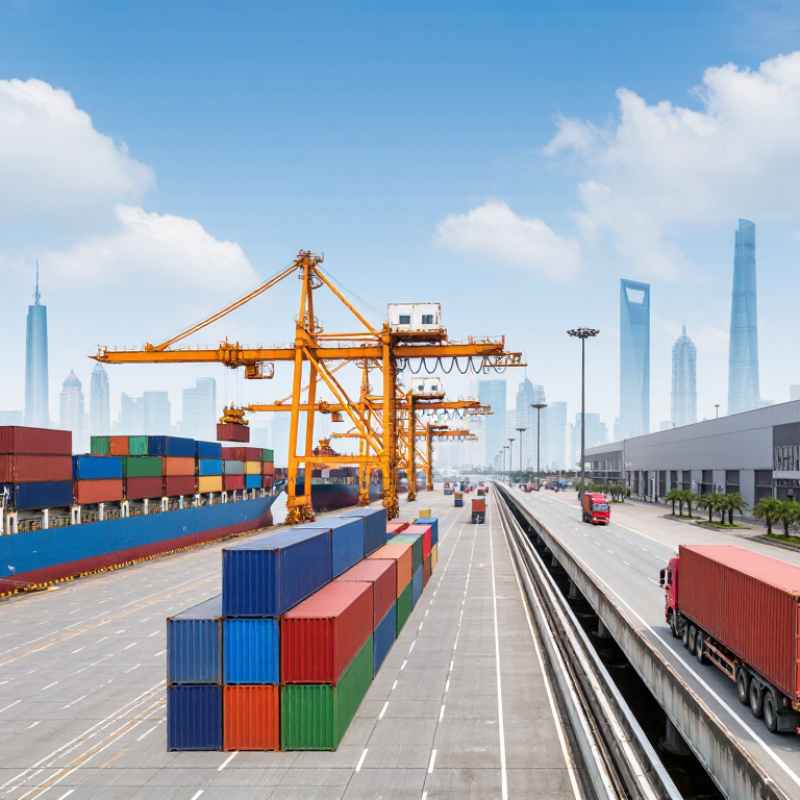
China FCL Rate Benchmarks: 20ft, 40ft, and 40ft HC in USD/TEU
China Top FCL and LCL Freight Rates for Global Buyers
China FCL Rate Benchmarks: 20ft, 40ft, and 40ft HC in USD/TEU
For global buyers, FCL comparisons should begin with the USD/TEU unit. A 20ft container equals one TEU. A 40ft container equals two TEUs. A 40ft high-cube container also counts as two TEUs, despite offering extra vertical space.
Indicative China export benchmarks often range from USD 1,200 to USD 2,400 for a 20ft container. A 40ft container may range from USD 2,000 to USD 4,200. The equivalent estimate is about USD 1,000 to USD 2,100 per TEU. High-cube equipment usually follows similar pricing, but availability can change the final figure. These figures are planning references, not firm quotations.
Route matters greatly. A nearby Asian destination may cost less than a long-haul European or American route. Peak seasons, fuel adjustments, port congestion, and inland trucking can quickly shift the number. Ask whether the quote includes origin handling, documentation, terminal charges, and destination fees.
Small details matter.
LCL may appear cheaper for light cargo, but handling fees can reduce that advantage. In my shipping reviews, buyers sometimes compare a basic ocean rate against an all-in FCL estimate. That is an imperfect comparison. A stronger method records container size, shipment date, trade lane, cargo volume, and included charges. Rates still move unexpectedly, so every benchmark needs a validity date and written confirmation.
How to read this chart: FCL figures show indicative spot-market ocean freight benchmarks normalized to USD per TEU for major global trade lanes. LCL figures show indicative consolidated-freight rates in USD per chargeable cubic meter. Values exclude customs duties, destination charges, inland transport, insurance, and peak-season surcharges.
China FCL Lanes: USD/TEU Benchmarks, Transit Days, and GRIs
China FCL lane benchmarks help global buyers budget before requesting a formal quote. From Shanghai to Los Angeles, indicative rates often range from USD 1,500–2,600 per TEU, with transit taking about 14–20 days. Shanghai to Rotterdam may cost USD 1,800–3,000 per TEU and require 28–36 days. Rates from Ningbo to New York can reach USD 2,200–3,600 per TEU, with transit near 30–40 days. These figures exclude destination handling, customs, documentation, and inland delivery.
General Rate Increases can change the picture quickly. A carrier may announce a GRI before peak season, even when earlier quotes remain valid. Ask for the validity date, sailing schedule, equipment type, and free-time terms. Confirm whether the price covers a 20-foot container or another unit. I have seen low quotes become expensive after local charges appeared. That mistake is easy to repeat. Transit estimates also depend on port congestion, blank sailings, weather, and customs clearance.
Tips: Compare at least three written quotations. Check the booking cut-off and cargo-ready date. Request separate origin and destination charges. Keep a small budget buffer for GRIs and rollovers. Do not judge service by price alone; a missed sailing can delay production and customer delivery. Recheck every benchmark before payment.
LCL Pricing from China: W/M Billing at 1 CBM or 1 Metric Ton
China Top FCL and LCL Freight Rates for Global Buyers
LCL Pricing from China: W/M Billing at 1 CBM or 1 Metric Ton
When buying LCL shipping from China, many freight quotes use W/M billing. W/M means weight or measurement. The carrier charges whichever produces the higher amount. One cubic meter or one metric ton becomes the basic billing unit. For example, cargo measuring 2.4 CBM and weighing 1.6 metric tons is billed at 2.4 W/M. Cargo measuring 0.8 CBM and weighing 1.3 tons is billed at 1.3 W/M.
Measure carefully. It matters.
A practical shipment review should include carton length, width, height, quantity, and gross weight. Multiply the carton dimensions in meters, then add every carton together. Use the final packed weight, not the product weight shown on a factory invoice. A small packing change can increase volume sharply. Lightweight furniture parts and retail displays often create this problem. I have seen shippers underestimate cartons by ignoring pallets and protective frames.
The W/M rate is only one part of the landed freight cost. Ask for origin handling, documentation, terminal fees, destination charges, and possible fuel adjustments. Some routes also apply minimum charges or different rules for unusual cargo. Confirm the carrier’s tariff before comparing offers. A cheap rate may hide expensive local fees. My own estimates have sometimes missed inner packing space, so checking the final packing list remains essential. Clear measurements and written charge terms make LCL pricing easier to verify and less vulnerable to unpleasant surprises.
China LCL Cost Drivers: W/M Minimums, CFS Fees, and 1–15 CBM Loads
China LCL pricing often looks simple until a 2 CBM shipment reaches the CFS. Most forwarders calculate ocean freight by W/M, meaning weight or measurement, whichever produces the higher charge. One revenue ton usually equals one cubic meter or one metric ton. A 1.2 CBM, 400-kilogram shipment is therefore charged by volume. However, a 0.4 CBM shipment may still face a 1 CBM minimum. This small rule can change the real rate sharply.
CFS charges cover receiving, unloading, measuring, sorting, documentation, and warehouse handling. Some quotes include origin CFS fees, while others list them separately. Ask for the exact billing unit and minimum charge. For a 1–5 CBM load, fixed handling costs can outweigh the ocean freight. A 10–15 CBM shipment usually spreads those costs more efficiently, but consolidation schedules may add waiting time. Wooden crates, irregular cartons, and difficult stacking can also increase handling costs.
I have compared quotes where the lowest ocean rate became the highest landed cost. The missing items were terminal handling, security fees, and destination delivery. Check carton dimensions before booking. Measure the packed cargo, not the product alone. Keep photographs and a packing list for verification. A spreadsheet helps, but it can still mislead when dimensions change after palletizing. Rechecking the chargeable volume is worthwhile, especially near 1, 5, or 15 CBM. Availability, port pair, season, and cargo readiness can change the final China LCL cost.
Indicative China FCL and LCL Ocean Freight Rates
| China Origin |
Destination Port Area |
Typical Transit Time |
20-Foot FCL |
40-Foot High-Cube FCL |
LCL Ocean Freight |
Rate Basis |
| Shanghai |
North Europe |
30–42 days |
USD 1,200–1,800 |
USD 1,900–2,800 |
USD 70–120 / W/M |
Port-to-port; ocean freight only |
| Shanghai |
United States West Coast |
18–28 days |
USD 1,800–2,800 |
USD 3,000–4,500 |
USD 90–150 / W/M |
Port-to-port; ocean freight only |
| Shanghai |
United States East Coast |
32–48 days |
USD 2,800–4,200 |
USD 4,200–6,500 |
USD 110–180 / W/M |
Port-to-port; ocean freight only |
| Shanghai |
Mediterranean |
28–40 days |
USD 1,500–2,300 |
USD 2,400–3,600 |
USD 85–140 / W/M |
Port-to-port; ocean freight only |
| Shenzhen |
Southeast Asia |
5–14 days |
USD 400–900 |
USD 650–1,300 |
USD 45–90 / W/M |
Port-to-port; ocean freight only |
| Qingdao |
Middle East |
20–32 days |
USD 1,100–1,800 |
USD 1,800–2,900 |
USD 70–130 / W/M |
Port-to-port; ocean freight only |
China LCL Cost Drivers and Typical Charge Ranges
| Cost Component |
Typical Charging Basis |
Indicative Range |
How It Affects the Final LCL Cost |
| Ocean freight |
Per revenue ton, using W/M |
USD 45–180 / W/M |
The carrier or consolidator normally charges the greater of weight in metric tons or volume in cubic meters. |
| Origin CFS receiving and handling |
Per CBM, often subject to a minimum |
USD 25–60 / CBM |
Applies to cargo unloading, sorting, cargo receiving, and consolidation at the origin warehouse. |
| Destination CFS handling |
Per CBM, often subject to a minimum |
USD 35–90 / CBM |
Usually billed at destination before cargo release; local terminal and warehouse tariffs can differ substantially. |
| Documentation and bill of lading |
Per shipment or bill of lading |
USD 30–75 / shipment |
This fixed fee has a larger percentage impact on small shipments. |
| Export customs and origin processing |
Per shipment or customs entry |
USD 40–120 / shipment |
May include export declaration preparation and routine origin-side processing, excluding special inspections. |
| Security, fuel, peak-season, or congestion surcharges |
Per W/M, container, or shipment |
USD 10–60 / W/M |
These surcharges can be temporary and may increase during peak seasons or periods of port disruption. |
| Destination customs, duties, VAT, and inland delivery |
Country-specific |
Not included |
These charges depend on customs value, HS classification, tax rules, delivery distance, and consignee requirements. |
Estimated LCL Cost by Shipment Volume
| Shipment Volume |
Common Buyer Profile |
Billable W/M Assumption |
Estimated Origin-to-Destination LCL Ocean Cost |
Main Cost Behavior |
| 1 CBM |
Samples, small replenishment, or test orders |
1 W/M minimum |
USD 180–420 |
Fixed documentation, CFS, and minimum charges make the cost per CBM relatively high. |
| 3 CBM |
Small wholesale or e-commerce replenishment |
3 W/M |
USD 300–680 |
Fixed charges are spread across more volume, reducing the average cost per CBM. |
| 5 CBM |
Regular small-batch commercial shipment |
5 W/M |
USD 430–920 |
LCL is often cost-effective when cargo volume is below the practical FCL threshold. |
| 10 CBM |
Medium commercial order |
10 W/M |
USD 750–1,550 |
Compare with a 20-foot container because FCL may become competitive after local fees are included. |
| 15 CBM |
Large LCL order or mixed-SKU shipment |
15 W/M |
USD 1,050–2,100 |
Consolidation risk, handling complexity, and destination charges become more important in the comparison. |
W/M Minimums and FCL Break-Even Considerations
| Decision Factor |
Typical Practical Rule |
Buyer Action |
| W/M calculation |
1 W/M equals either 1 metric ton or 1 cubic meter, whichever is greater. |
Provide both gross weight and packed volume before requesting a quotation. |
| Minimum billable volume |
Many LCL services apply a minimum of 1 CBM or a fixed minimum charge. |
Ask whether the quotation uses a 1 CBM minimum and whether origin and destination minimums are separate. |
| Oversized or dense cargo |
Heavy cargo can be billed by weight even when its physical volume is below 1 CBM. |
Check the density calculation and any limits for pallets, machinery, batteries, liquids, or dangerous goods. |
| FCL comparison point |
FCL commonly becomes more attractive around 10–15 CBM, depending on the lane and local charges. |
Compare the complete landed logistics cost, not only the quoted ocean-freight line. |
| Rate validity |
Ocean rates may be valid for only a few days to several weeks. |
Confirm validity, sailing date, equipment availability, free time, and all temporary surcharges before booking. |
Data basis: The figures are realistic indicative market ranges for planning purposes and are not a live quotation. They exclude import duties, VAT, customs penalties, insurance, special cargo fees, demurrage, detention, and most destination inland delivery charges. Final pricing depends on the exact origin and destination ports, cargo dimensions, gross weight, commodity, incoterm, sailing schedule, season, and carrier or consolidator tariff.
How Buyers Validate Quotes: Incoterms, BAF, GRI, and Rate Validity
When comparing China FCL and LCL freight rates, buyers should validate the quote before comparing the final numbers. Incoterms define which party pays freight, insurance, customs charges, and destination handling. A low FOB quote may look attractive, but it can exclude several costs after loading. Confirm the named place, container type, and shipment responsibility in writing.
Fuel charges also need careful review. BAF can change when fuel indexes move, while GRI may apply during a scheduled rate increase. Ask whether these charges are included, estimated, or adjustable. Request the calculation basis, effective date, and currency. For LCL cargo, check minimum chargeable volume and origin consolidation fees. Small cartons can become expensive quickly.
Rate validity deserves equal attention. A quote valid for seven days is not comparable to one valid for thirty days. Ask whether the validity covers the booking date, sailing date, or cargo receipt date. In my quote reviews, this detail often causes disputes. I once accepted a lower FCL rate without checking its validity period. The rate expired before booking. That shortcut was my mistake. Reliable buyers keep the quotation, surcharge sheet, and written clarifications together. Even experienced teams miss one fee sometimes.
Conclusion
This guide provides practical benchmarks for China FCL and LCL Freight, helping global buyers compare shipping costs and plan international purchases more accurately. It explains typical full container load rates for 20ft, 40ft, and 40ft high-cube containers, with pricing presented in USD per TEU. It also reviews major trade lanes, estimated transit times, and the impact of General Rate Increases (GRIs) on final quotations.
For less-than-container loads, the guide explains how charges are calculated by weight or measurement, commonly using 1 cubic meter or 1 metric ton as the billing basis. It highlights key cost drivers, including W/M minimums, CFS handling fees, and shipment sizes from 1 to 15 CBM. Buyers will also learn how to validate quotations by checking Incoterms, bunker adjustment factors, GRIs, included services, and rate validity periods before confirming a shipment.